
How does our attention get pulled away?

It is no secret that we live in an age of distractions and short attention spans. “Doomscrolling,” the word for finding yourself sucked into social media for much longer than you ever intended to be, is a household word at this point that just about every single person has experienced. In all fairness, most of these distractions, social media or otherwise, are literally designed to keep your attention. You are motivated to keep going through those little dopamine rushes that most of us are also becoming aware about. However, we certainly have motivations to not get distracted, especially since most of us are in a college environment. We have grades to think about, and a limited amount of time in our days most of us would rather spend with friends. How often do distractions actually win out, and how much are we enabling these distractions?

Procrastination

In my personal experience, I find myself most vulnerable to digital distractions as a form of procrastination. If there is something I do not want to do, then I am more likely to spend more time on my phone or more likely to pull up a sudoku puzzle on my computer instead of reading the Walden text that was on my screen before. This only gets worse if it is an assignment that I feel like I am going to have a particularly hard time on. I am going to dread the extra amount of work, but I do know that I still have to start it at some point. This is where I give myself the digital distractions that I do agree to attend to. They are the limited distractions that have a time limit. I will only do the amount of sudoku puzzles that are available in the New York Times. I will only scroll on Social Media until my screentime count kicks in. Are these time consuming and distracting? Absolutely! But they are distractions that I am actively allowing myself, as I do enjoy them and because I have the belief that they will end. I am living my life under the dictates of the distractions I allow myself. Unfortunately, the one that gets out of hand is the screentime one. It is where I fall victim to a trap that a phone has set for me. See, when you set an app to only give you an allotted amount of screen time every day, and that time runs out, the phone does not immediately kick you out of the app. Instead, it gives you four options. Only one of the options will shut the app. The other three options allow you to extend your screentime, as well as to shut off the screen time limit for the app for the rest of your. All it takes is a simple thoughtless tap. Now, yes, when I am making the choice to extend these times when I tap “fifteen more minutes,” which I especially do when dealing with a particularly threatening assignment on the horizon and want to reset that timer. However, this choice is made under deliberate pressure of someone who designed this option, who most likely did so with the intention of making it easier to override. People who have screentime limit most likely due so because they have trouble self-regulating, so making the option to override is able to be done so thoughtlessly makes it feel like an intentional trap. A more concerned part would have made override more difficult, like having to go directly to “Settings” to override it, so a user would be forced to give themselves a moment to think about what they are doing and possibly change their mind. The current design is deliberate pressure intended to keep me distracted.

What makes an assignment seem intimidating or easy to get distracted on?

Now, I tend to allow myself distractions on certain assignments more than others, which is interesting. I had a heap of assignments, both intimidating and not, last week, so it was pretty easy to analyze why that is. The assignments that are always the least intimidating are usually the reading directly from the modules in this very class, English 340, such as the IIIF Images module from last week. These are the assignments that I never had trouble starting or finishing. I think this is because they were usually pretty short, so it was easy to hype myself up and get them done. More than that, they usually came along with instructions to follow on VHS Code as you read, so they kept one engaged Another assignment that I do not get distracted during is reading out of a physical book, particularly a novel. I am attempting to read the novel Muck for my Bible as Literature class without getting much of a schedule, but I am reading two chapters a day without any distractions. This is because I enjoy reading, and because it actively takes me away from any screens that may want to take my attention away. The assignments that are intimidating and that I find myself getting distracted by are two particularly difficult reads that happened to be on my schedule last week, and pretty regularly. This is Walden and the Bible. They are intimidating because they do not keep my attention. They are rambling and repetitive, and though I can see the beauty of their ideas, I know it is going to take more focus and effort to read them than I am occasionally willing to give. It is being bored in an assignment that makes me open to distraction in this case, but I would say that getting distracted during these texts is certainly more something I agree to do than hesitating to start them, even though both are common. The absolute worst offender of intimidating assignments are newspaper articles. I am member of the Lamron, which usually means I am writing at least an article weekly. Last week, I took two articles, one of which was in the News. You need a lot of sources to write for News, and rightfully so, but that means these articles come with a lot of research. That makes it daunting to start, and when you actually start writing, it is so easy to get distracted by the random questions that pop into your head when your cursor is already at the search bar.

Distracted from Distractions

Here is a fun little corner I ended up backing myself into last weekend. Feeling burnt out from both social media and my workload, I made myself a little deal. I would start my homework after I finished a drawing I had been wanting to make (“It is not procrastination if it is productive!” What a beautiful lie we love to tell ourselves as we clean our dorms to avoid that essay). Now, that is not a “digital distraction,” but it was certainly one that I agreed to attend to. At least, for the most part I agreed. In an ideal world, I would have sat down, finished my drawing in a timely manner, and moved right along to my homework feeling refreshed and rejuvenated. Unfortunately, I encountered a problem because of the fact that I usually use reference photos while I draw, so my phone was right next to me and I was glancing at it quite a lot. This made it easy to distract myself in the same way I could while researching for an article. I am already on Google, so what’s the harm in typing in that one random question that popped into your head, and accidentally falling down that rabbithole of link after link that has nothing to do with the task at hand.

In conclusion, it seems like knowing these distractions are available makes it harder to ignore them. If your screentime reminder is giving you the option to ignore it with just a tap, of course it is easy to say “fifteen more minutes”. If you are already doing something on your computer, and your not having a great time, you start to notice it would be so easy to switch tabs to a little mindless game online, and voila, you are stuck. A lot of it comes down to self-discipline, but we are also living in a world where phones and computers want you to waste time. It gives them money, so of course they are going to make it easy. We are living our lives under the pressure of these distractions, and we have to make an effort to be conscious of where we are putting our attention.
Who’s Really In Control? Attention and Autonomy

The themes in Henry David Thoreau’s Walden truly resonate with me because I too have been trying to live a more present and intentional life over the past year. In my second semester of college I experienced intense anxiety and I was looking for ways to enjoy life again. I deleted social media and found myself trying to take control over my “life experience” in a new way than I had before. I returned to activities that I once loved as a little girl like coloring, sitting outside and watching movies. However, despite my lifestyle change of deleting major social media platforms like Tik Tok and Instagram, this past week I have realized that distraction still finds a way to sneak into my daily activities. In documenting my attention over the past week I discovered two themes. First, as described by Tim Wu, advertisements and “data collection” are so meticulously catered to preferences and past searches, and my logical thinking completely shuts down when I view one of them. I found myself clicking on an ad or a notification, and browsing on a page I had no intention of being on as if it was my idea. Secondly and arguably more concerning, the capitalistic, uber productive society we live in causes a feeling of urgency when performing tasks or making decisions. I realized, when I saw the notification of an advertisement come across my computer screen, it was as if there was a magnetic force pulling me to check what it was. When clicking on an advertisement feels like life or death, we know we have a problem.

It’s funny how even when I was deliberately paying attention to my attention, my mind was influenced by forces of our impossible digital environment. Multiple times this week, I fell victim to algorithms that cater your online feed, your taste and what you desire. While researching supplies I needed for my lesson plan on Amazon, I suddenly found myself shopping for headbands. Amazon has features like “you might also need” and “bundle these items” that distract you from the thing you intended on buying. Even the feature that shows what you searched prior when you go to look for something new is a reminder of whatever materialistic thought you had yesterday. At this moment I paused, because while I was trying to research something for an important school project, I found myself online shopping for a headband that I had decided previously I wasn’t going to get. The distraction of seeing the headband I was looking at earlier threw me off so much that I forgot I made the logical decision not to get a headband because of trying to save money. These uninvited advertisements interrupted the thinking of my logical brain, making me forget that previously I decided I did not need one.

This past week, every time I sat down to do work, the ding of a notification or the icon on my computer interrupted my focus. On Tuesday this happened four times while I was completing an assignment. Almost every time I received a notification from pinterest, sephora or an email from a store I immediately clicked on it as if I was desperate to get away from my assignment. Sprinting as far away from my boring homework as I could, my mind was stimulated by the sight of brightly colored, aesthetic products and clothes. Of course all of the emails I receive are products I have looked at or absolutely love, keeping me hooked as if I have to keep looking. My algorithm knows me so well, sometimes I think better than I know myself, and that catches me even when I don’t intend on shopping. Algorithms trick your brain into believing that this is the route it wants to take as if it was you who had the thought to search for a random product. Through this study, I realized that most of the time when I think I am choosing to take a brain break from my work and maybe look at a shopping site online, it is my phone that encourages this. It truly made me analyze what decisions I make for myself based on my own free will or which ones I make because I am influenced by my digital environment.

The results of this project were concerning, as I truly realized that my digital environment, the constant advertisements, and data collection have more control over my life than I thought. I’ve never really worried about AI taking over the world, but if the digital world around me is shaping my behavior and autonomy that starts to feel uncomfortably close. I realized that while I thought I was able to “live my life” based on my decisions, of shopping for my school project and taking a break from studying, these choices were all suggested to me by digital pressures.

Unfortunately, I think the pervasive distractions that come with living in such an advanced technological age are inevitable. However, this project has opened my eyes to how oblivious I was to them influencing me on a day to day basis. I intend to be more mindful when I feel myself influenced to click away from whatever I intended to do. I think as a society we need to continue to have these discussions of the extent to which platforms can track our data and use advertisements and that we have structured legislation as suggested by Tim Wu. Going forward I strive to be mentally tougher and resist the urge to experience something if I didn’t intend to in the first place, because we have one life and I want to be the one deciding how to live it.

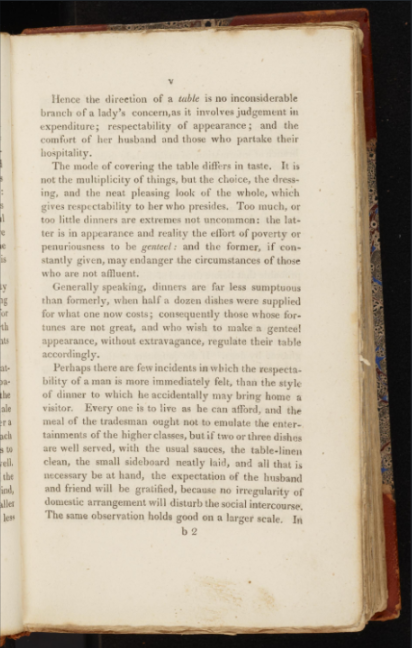
Blast From The Past Through Transcribing

Screenshot 2026-04-17 9.57.54 PM

What I transcribed

I unfortunately missed transcribing in the Colored Conventions campaign, so I searched for other projects I could transcribe through. I found projects through the Library of Congress – By The People, and was able to transcribe a page from a campaign that reviewed culinary pages from revolutionary times. The page I transcribed seemed to be from a magazine with instructions on hosting dinners, and how to host efficiently.

What I learned from transcribing

I didn’t know much about digitized documents before before I participated in the transcribe-a-thon. I didn’t realize how many documents were still being worked on in these archives. It’s very interesting to me that some of these websites, like the Library of Congress let anyone transcribe for free, and don’t require and certifications. Even if they go through review after transcription, it’s still intersting to me that they would let any Joe-Schmo do this tedious work. But that may also reflect how few people there are that do it, and how desperate they are for people to help, that they take so much volunteer work. One of my biggest challenges transcribing, specifically this page, was ensuring that I was doing it correctly. Making sure I had line-breaks in the correct spots was also difficult, especially if I was in the zone and just typing away, I had to check back in with myself to make sure I was following all the rules.

What I learned about the history these documents embody

I learned a lot about the manners and etiquette of the time period. It has many more rules than we have for normal dinners today. Especially about making sure dinners aren’t too flashy or too dull for the occasion. I was also surprised by the expectations for the guest to match the home that their visiting, whether they are wealthier, or poorer than the host family. I wasn’t very surprised that the magazined seemed directed towards wome, with language that mentions the readers/hosts husband, considering the traditional patriarchial values of the time period.It was very interesting to read into what is essentially the equivalent of our time’s “Teen Vogue” and to see the reading material available to average people.

How I see things now

I definately have more of an understanding for the value in these projects and campaigns. When we are transcribing, whether it’s an authors work, or a promotional ad, or government papers, we learn so much about the era and the way people lived. Transcribing things from authors is similar to getting an insight into their brain, like when we look at the Walden Manuscripts. It’s like getting to watch the process of someone working. I also liked the page I transcribed because it was somewhat relatable. It reminded me of reading my old babysitters magazines about gardening, and reading the columns that had tips and tricks for them, and it’s somewhat comforting that even hundreds of years ago, people were still writting and reading about daily life advice. Working with these documents helps me feel closer to the time period, and makes the people that lived through it feel more real, and less like fictional stories. It’s a good reminder for how people’s lives used to be and depending on the document you’re working with, it could also be a good reminder for how far we’ve come, and how good we have it today comparably.

Do We Choose Our Devices, Or Do Our Devices Choose Us?

Intro

After working closely with Walden by Henry David Thoreau for the better part of this semester, I’ve been doing a lot of self-reflection. One area in particular that I have reflected on is my attention. Specifically, what I choose to pay attention to and what takes my attention unintentionally. Even in the 1800’s, Thoreau warned readers about the advancements of technology stealing our attention from what truly matters. I always knew the digital world took up a lot of my attention, but it wasn’t until paying super close attention to my habits this past week that I realized just how much of it it actually takes up.

Data

One area where I already knew my attention was compromised was in the classroom. I try to pay attention, and some days are better than others, but the moment I get bored or see that I have a text, I pull out my phone. What I didn’t realize, though, was how often I do this per class. So, I decided to take note of every time I pick up my phone during class… and the data shocked me.

Every day (apart from Friday, when I only have class), I have two classes that are about an hour and fifteen minutes long. After averaging my data, I found that I pick up my phone about twenty-one times per day of classes. I also kept track of which app I tend to go on, and it was almost always Snapchat. I also noticed a trend that I pick up my phone more in my classes on Mondays and Wednesdays than I do on other days of the week. This is likely because that my second class on Tuesdays and Thursdays doesn’t allow phones to be out. Then, on Fridays, I only have one class, so there’s simply less time.

Realization

After seeing just how often I check my phone during class, I started paying attention to what actually leads me to pick it up. I soon realized that most of the time, I don’t even do it for a specific reason. Yes, sometimes I see a notification and check it because of that, but the majority of the time, I just pick it up out of habit. It’s almost like I expect something to be there to entertain me. Also, these “quick checks” quickly turn into falling down a rabbit hole of scrolling and missing parts of the lecture.

Analysis

In reflection of what William James says about how our experience is about what we “agree to attend to”, I originally thought that my phone was something I chose to give my attention to. But after this realization, I feel as though it is more of a reaction than a decision. My boredom in class feels like something that can instantly be “fixed” by the apps on my phone, since they constantly offer notifications and distractions. Instead of completely “living my life” based on what I want to focus on, my experience is constantly being interrupted and shaped by these small, digital distractions.

Connection/Reflection

This connects to Thoreau’s warning that new technologies can act as “pretty toys” that distract us from more meaningful things. In my case, my phone is something that repeatedly pulls me away from being fully present, especially in situations where my attention should be focused elsewhere, like class. What stood out to me is that this distraction doesn’t feel extreme in the moment, but when I look at it over time, it adds up in a way that clearly impacts how I spend my time and what I actually take in.

After noticing all of this, I would like to say that I’m going to completely change my habits, but realistically, I don’t think that will happen right away. However, I do think that being aware of how often I am pulled away from what I’m doing is a step toward having more control over my attention. Even just recognizing that these distractions are not always a conscious choice makes me more aware of when it’s happening. Moving forward, I think I’ll at least be more intentional about when I allow myself to get distracted, rather than letting it happen automatically.

Note: I used ChatGPT to help structure this post and improve clarity, but the ideas and reflections are my own.

Attention in the Age of too much

Introduction

Over the past couple of weeks I have kept a detailed journal, tracking the things I choose to pay attention to, and the aspects of my life that cause me to become distracted. In most instances it would be easy to evaluate the ways in which the digital world–whether accessed through my phone, computer, or television–is one of, if not the most distracting element of everyday life. However, I think it would also be interesting to dive into different forms of distraction and specifically the ways in which I have been forced to strike a balance within my own attention. I will–because of its increased effect on my life–look at how digital technology plays a role in stripping me of some autonomy, when looking at attention from an analytical perspective. However I also wish to acknowledge various other forces of distraction and how each are not necessarily negative or positive in their own right. With this post I analyzed the data I collected and came to draw interesting conclusions about the effects the digital world has on my life and forces in life I agree to attend to, compared to the ones that I am forced to look at.

Data of Distraction

Over the course of a couple weeks, I found myself working to strike a balance between staying on top of schoolwork and having enough time to enjoy the aspects of life I deem valuable. Within this idea, I wanted to have an overall beneficial and healthy balance between both parts of my life; However, this balance was most difficult to achieve when I was distracted by my phone or computer. In many ways I already had a deep understanding of the ways in which digital technology most definitely stripped me of independence and uncoerced choice of what I wanted to pay attention to. After collecting data, I looked back and analyzed the various times I was distracted, and though there were moments where I couldn’t put my phone down, or received ads on my computer that sent me on a long winded shopping spree, I found that technology was not consuming me. I documented most of my information based on the balance I would want to achieve, I would specifically take notes of distractions that occurred during my time doing scholarly work and the times in which I was simply hanging out with my friends or reveling in my own hobbies. I found I was more distracted by my phone and computer, though again not as often as I thought I’d be, when I was doing school work, specifically work that, in my opinion, felt like busy work or didn’t strike my attention. I was almost never distracted by technology when spending time with my close friends or when I was drawing, playing instruments, or journaling.

The digital environment that surrounds all of us can become overbearing in many aspects, and because of the constant exposure to this world, it can become increasingly difficult to create a barrier between ourselves and the internet. For me I found it most difficult to separate myself when I was trying to complete certain homework assignments, however in almost every other aspect of my life, I do not feel a deep pull to constantly be scrolling through social media.

Digital technology was most definitely causing me the most problems when it came to different types of assignments I wanted to complete. I struggled to carve out time to read diligently when certain aspects of the assignment seemed difficult to fully comprehend or give my full attention to. Sometimes I was really overwhelmed with the extent of assignments I had to complete and it was much easier to just let myself sink into scrolling through social media. Despite this digital adherence, there were some instances where I was able to fully immerse myself into my work. Reading Walden has been one of my favorite tasks over the course of the semester. When reading, I very much agree to pay attention to Walden and I face limited distractions from my work. There were also many other things that I was able to direct my focus to without the pressure of social media weighing on me.

What I Agreed to Attend to

There have been many other instances throughout the past couple weeks that I’ve kept a journal, where I agree to attend to certain aspects of my life. As discussed by Tim Wu, this has shaped my lived experiences throughout the course of my life and I see that a lot more clearly when looking back on my recorded data. So, what have I agreed to attend to? Looking back over the past couple weeks from a broader, along with a more analytical perspective, I’ve found that I am quite focused on my hobbies, time spent with friends, and being outside in nature. When I am playing guitar, journaling, drawing, or if I’m spending time with people close to me, I am much less at risk of facing digital distractions. I am increasingly more reluctant to go onto my phone, and as I was documenting the distractions I would face during everyday life, they were significantly smaller than the amount of distractions I faced when doing schoolwork. I think that this aspect of attention is crucial to look at. I don’t believe that my life has become entirely overruled due to the existence of constant advertisements and social media being so readily accessible, but I do think that it poses a difficult challenge when it comes to focusing on daunting or boring tasks. Another smaller aspect of my attention that I thought was increasingly interesting was the distractions I faced sometimes came from the idea that in agreeing to pay attention to my hobbies, being outside, friends, etc, those elements of my life drew me away from wanting to focus on other things. Some days specifically in class it would be hard to concentrate when the possibility of everything else I would rather be doing stood stagnant in the back of my mind. I wanted to include this aspect of attention because I believe it creates nuance to the question of whether or not distraction is necessarily positive or negative.

What I was Forced to Attend to

It is easy to agree to attend to things I find valuable and enjoyable. I don’t feel like digital technology strips me of being present from lived experience, but I acknowledge that it makes certain aspects of life feel dull or boring. For me homework can sometimes become a list of chores, rather than a learning experience due to the accessibility and mind numbing convenience of just scrolling through my phone. And I heavily dislike this; I want to enjoy school and bask in learning opportunities because I do truly value it. So I think there are aspects of digital technology that are not beneficial and are simply designed to distract people from living their life in the present, even when that present moment can seem uninteresting. My phone often forces me in some ways to pay attention to things that are not fulfilling or beneficial, but are thrown in my face to a point where it is almost impossible to ignore them. Ads in the corner of websites, notifications from social media accounts, even the constant emails I receive from the New York Times send me down rabbit holes surrounding the modern political climate. In all of these instances I don’t feel that I have gained anything worthwhile, and therefore am being forced to pay attention to certain things.

Conclusion

Overall I found that I was able to live my life as I have been: independently of digital technology and maintaining a balance between focusing on what I need to and what I want to. I found that for the most part, I faced almost no distractions when it came to moments I was outside as the weather got nice, moments spent with loved ones, and times spent alone doing things I enjoy. In contrast to this I did face some distraction when doing homework or reading assigned texts for classes I am enrolled in. Though these distractions were much less frequent then I thought they would be, and were only recurrent when the work felt tedious and uninteresting. I do feel there are many aspects in our digital world that force us to look at them. Whether that appears in forms of advertisements, social media posts or new articles, companies understand how consumers work and design their content based on the accessibility we all have to the digital sphere. Therefore, it is becoming very important to examine the ways digital content is designed to distract you, once we do this it becomes much easier to have control over our attention.

Trapped in the Online World

When it comes to paying attention to what we pay attention to, I found this quote, originally from William James, that Tim Wu used when discussing attention to be relatable. “…our life experience would ultimately amount to whatever we had paid attention to. At stake, then, is something akin to how one’s life is lived.” In the end of our lives, we will look back and the most important things in life, the things that gathered most of our attention and time, will come to mind. Whether this be family, friends, travels, our time in nature and the world, or today, perhaps time spent online, losing and taking away attention from the important things.

This is not to say that the online world is an all-around negative aspect of the modern world that only causes harm, as there are many good qualities and outcomes as to how far society has advanced in technology. However, oftentimes the online world is the easiest place for your attention to be manipulated and turned elsewhere. For example, as I was paying attention to what I paid attention to over the past week, and when the online environment was involved, it often blurred the lines between what I agreed to pay attention to, and what I was forcibly or redirected to pay attention to.

I found when I played a two-minute movie trailer on YouTube, in order to watch that I had to watch thirty seconds worth of advertisements. When my friends and I decided to watch another movie trailer, the same problem occurred, with being forced to watch more advertisements. While these short ads are what helps keep platforms like YouTube running so we’re able to watch videos like movie trailers, the short advertisements you watch throughout life add up. If you watched just five minutes of advertisements every day of the week, whether these are on television, the radio on your drive to work, your phone, computer, social medias, etc., that would be 35 minutes of your week, and 1,820 minutes of your year. Most people one way or another experience an even larger number of advertisements daily, which will end up making up for a large amount of time in our lives.

I also found that when I would look at articles online, whether for school, or travel ideas, I was oftentimes prompted to make an account with the website, sometimes just to access the full article. This isn’t a big deal until you are receiving hundreds of emails in your inbox from various articles you viewed one time over the years. This takes more time and attention away from your life, and the things you truly care about, to clear out an inbox or create an account to read any article you encounter. Along with this, advertisements can pop up along the sides of articles, or when you first enter the website, prompting your attention away from the information you were originally seeking. Alongside this, when algorithms learn your patterns and interests, the advertisements you are shown become harder to ignore and divert your attention from. For example, I was recently reading an article on the best rated light sources for SCUBA divers, but found the website continuously offered distracting advertisements such as “win a free trip” giveaways, or links to equipment I was not researching. This makes a simple task distracting and takes more time to research due to my attention being drawn away.

The worst section, in my opinion, of the online world for attention is social media. Whether it is TikTok, Facebook, Snapchat, Instagram, etc., they are all designed to keep your attention and time on these apps for as long as possible. When you agree to put your attention into social media and just scroll for five minutes, this will eventually turn into an hour, or hours. It has become social media’s entire goal to keep you on their platform for as long as possible, even if it is destroying people’s attention spans and wasting precious time here on Earth. Thoreau greatly emphasized the importance of paying attention to the little things around us, and not letting ourselves get caught up in a fast-paced, never fully pleased world. When you just seek more and more, nothing will ever have any value, and you will stop seeing the important things around you. I think the same applies to social media. I found myself multiple times over the past week getting trapped in the online world of social media, my attention span withering away scrolling through short 15-30 second clips. In today’s world, having the ability to step back and put your attention towards the things you truly care about is difficult, but not impossible. While we may not always be able to control outside factors that try to steal our attention, such as advertisements in the online world, we can control what we intentionally put our attention into.

Paying Attention in A World Full of Distraction

Tracking My Attention This Week Over this past week, I started paying close attention to what exactly I spend my time focusing on. I realized that when I try to complete work or any task in my room, I get distracted by many different things. I think about how I need to clean and organize specific things, I get distracted by the people I live with, and I become interested in what everyone else around me is doing. Then, I go on my phone as a break or when an assignment becomes too much for me to complete, and then get distracted with Snapchat, TikTok, Instagram reels, group chats, and online shopping. I decided to see how much better I could focus in a different setting, so the next day I went to Cosmic Charlie’s- my favorite coffee shop in Geneseo. I was much more focused on my essay that I needed to complete, and less focused on my phone and on the people around me. This helped me realize how much setting affects our attention. I decided to start being more intentional about where I went to complete a task.

Another important thing to note is that before Lent this year, I decided to give up TikTok. That means 40 days without TikTok. I quickly realized that I would subconsciously press the app on my phone whenever I was bored or needed a break from whatever I was doing, so I literally needed to remove the app from my homescreen to avoid using it. I realized how useful this feature is on iPhones- you don’t need to uninstall the app and lose any data, but you can remove it from your homescreen so you can’t see it. You can still look up the app, then press on it, but that takes more work and thought, and is something I could actually control. I found that during this time, I spent more time on Instagram reels, kind of as my TikTok substitute. The thing I realized about reels is that there are considerably fewer ads. This means I wasn’t compelled to then go on TikTok Shop, which was another part of TikTok I spent way too much time on. Yes, I still spent about an hour a day total on reels, but I can confirm that this is much less time than I was spending on TikTok a day.

After Lent, I went back on TikTok and was greeted by ad after ad. I quickly realized I didn’t want to go back to spending hours a day on this app, and haven’t been on it since. I go to sleep earlier, interact with the people around me more, and am bored a lot more, which is a good thing. It is okay to be bored and take up different hobbies, and in my opinion, this is much healthier than spending every bored second scrolling on TikTok. During this week of collecting data and intentional observation about what I pay attention to, I realized even more about how much better my life has become because of this decision, and how much more time I have.

What I Choose Versus What Pulls Me In One of the more interesting parts of this assignment for me was thinking about what “I agree to” versus what I basically am forced to pay attention to. I would say that I definitely choose to focus on and prioritize my assignments, my conversation with my long-distance boyfriend over the phone, and planning my days out. That being said, these things also compete with distractions that feel almost impossible to ignore.

Even though I have turned off most of my notifications aside from messages and phone calls (because they were driving me crazy), I still find myself checking my phone constantly for no good reason. It is one of my very strong habits that feels impossible to stop. Then, when I do get a notification, it immediately takes my attention away from whatever I was previously engaged in. Whether I am in the middle of a conversation, assignment, or task, checking my phone is a constant habit that I haven’t yet learned how to break.

This idea connects a lot to Henry David Thoreau and his ideas about how outside forces shape our attention. Even though he was talking about things like a telegraph, this still seems very relevant now. Our cell phones are more advanced than a telegraph, but it is all the same idea. Technology is constantly competing for our attention and focus.

Digital Distractions & “Attention Merchants” Tim Wu, author of Attention Merchants: The Epic Scramble to Get Inside Our Heads, confronts this idea a bit differently than Thoreau. Instead of us needing better habits when it comes to technology, Wu argues that there should be laws and regulations to limit businesses from trying to grab our attention because they are gaining profit at the expense of our freedom, time, and money. This makes me immediately think about TikTok and how they developed their own shop in which they are constantly advertising their products using influencers and ads.

Even when I think I am in control, I know that there are systems in place that are designed to keep me hooked. Whether it is the simplicity of being able to refresh the page, or constant ads, it is all designed to do the same thing and make it impossible to say that I’m choosing what exactly I pay attention to.

Am I Actually In Control? After tracking my attention over the past week, I would say I do feel more in control of at least acknowledging what has my attention. Am I able to say I only pay attention to what I want to pay attention to? No, and I think this is nearly impossible in this day and age- but I do think that is okay. I think it is most important to acknowledge what grabs your attention the most, and from there I can find ways to stay more engaged in what I want to, and less on what I don’t want to. I am aware now of how often I turn to my phone, scrolling habits, and advertisements. Ultimately, I am proud of my decision to stay off TikTok, and I know that it has made a huge difference in my life.**

Will Anything Change? Honestly, I don’t think this assignment will necessarily change my current habits, but I think that is okay. It has definitely made me more aware of what I pay attention to. I am more conscious of what and when I am getting distracted, and why that is.

My big takeaway is that attention isn’t just about discipline in your own habits. There are so many external forces, like algorithms and ads, that are constantly competing for my attention. For whatever reason, I feel some sort of power now that I can recognize this. Instead of feeling like I failed when I get distracted, I know it is more about me trying to navigate a system designed to make me lose focus. At the end of the day, I am not perfect at managing my attention, but I am more aware of it than I was before.

Living with notifications: A week of watching my own attention

For a week, I tried to pay attention to my attention, something that Thoreau would probably say I should have been doing all along. I did not go to the woods, but I did go to class, The Lamron office, WGSU 89.3, sorority meetings, and hung out with my friends. I carried my phone and started noticing how often my attention was not really mine.

Below is what I learned about what “I agreed to attend to,” and what was forced on me.

What I tracked: I kept a running log in a Markdown file on my laptop and added quick notes on my phone. I focused on:

  • Invited attention: things I chose to focus on
  • Uninvited attention: notifications, ads, algorithmic pulls, and digital interruptions
  • Moments of regained autonomy: when I resisted or redirected my attention

A week of attention: What I actually noticed Thoreau warned that “our inventions are won’t to be be pretty toys, which distract our attention from serious things.” My pretty toys were:

  • GroupMe blowing up during class (sorority, Lamron, radio, etc.)
  • ESPN alerts I did not ask for
  • Brightspace notifications that felt urgent (even though they were not)
  • Instagram/Snapchat messages that pulled me in for “just a second”
  • Apple News pushing stories I did care not about I counted: on Tuesday alone, I got 63 notifications before 3 PM None of them were emergencies. All of them demanded a tiny slice of my mind.

The algorithm knows I am a Sports Editor/into sports Scrolling “for five minutes” turned into:

  • 20 minutes on Twitter/X reading up on trades and game highlights
  • 15 minutes on TikTok watching mor highlights and podcasts
  • 10 minutes on Instagram reels of athletes/sports that I do not even follow I did not choose these videos, they chose me.

Ads that followed me like mosquitoes on a muggy summer night I looked up one pair of jeans on Monday. For the rest of the week:

  • Instagram: ads
  • Google: ads
  • TikTok: ads
  • Even ESPN: ads It felt like the digital version of Thoreau’s “brain rot,” not because the jeans were evil, but because the repetition made my thoughts feel less like mine.

The moments I actually chose my attention These were fewer than I expected:

  • Editing a Lamron article and getting into a flow
  • Running a WGSU sports segment and forgetting about my phone
  • Reading for my anthropology class without checking anything
  • Talking with friends at dinner and realizing that I had not looked at my phone in an hour These moments felt like what William James meant when he said, “My experience is what I agree to attend to.” They actually felt like MY life.

How my attention was compromised

  1. Constant micro-interruptions Even when I ignored notifications, they still registered.
    • A buzz, a banner, a preview = a thought Thoreau wrote that the mind can be “macadamized”, broken into fragments. That is exactly what it felt like.
  2. The illusion of choice I thought I was choosing to scroll. However, the more I tracked my attention, the more I realized that I am not choosing the content, the timing, or the duration. The platforms were choosing for me.
  3. The loss of mental quietness Thoreau wanted us to “read the Eternities.” I was reading: headlines, hot takes, ads, notifications, etc. None of them were eternal, and most were not even important.

Did tracking my attention change anything? Honestly? a little, but not dramatically. I did not turn into a digital monk, I did not delete my apps, and I did not turn off my notifications. But I did start:

  • Putting my phone in my bag during meetings and class
  • Turning off nonessential alerts
  • Catching myself when I am being pulled instead of choosing The biggest change is awareness. I can now feel the difference between the attention I give and the attention that is taken from me. That distinction alone feels like a small reclaiming of autonomy.

Living my life, or letting it be lived for me? Thoreau believed that attention shapes perception. William James believed it shapes experience. Tim Wu believes it shapes freedom. After a week of watching my own attention, I believe all three are right. My digital environment constantly tries to live life for me, to decide what I see, what I think about, and how long I think about it. Noticing that process gave me a little more control. Not perfect control, but enough to feel like I am choosing my life a bit more deliberately. Even if I still check Instagram too much!

Tracking What I Chose to Pay Attention to and What Chose Me

Blog Post #2 Paying Attention Marlea Petroziello 04/17

What I Chose to Pay Attention to Throughout My Week Throughout the week, I noticed that a lot of my attention was directed toward things I intentionally chose, like schoolwork, hanging out with friends, listening to music, and checking social media. These moments felt productive or meaningful because I had a reason for doing them. When I sat down to complete assignments or respond to people, I felt like I was in control of where my focus was going. I also chose to spend time on entertainment, like watching netflix, but usually with the intention of relaxing or taking a break. At least at the start, these choices felt deliberate.

What Took Away My Attention At the same time, a lot of my attention was taken from me without me fully deciding on it. Notifications were one of the biggest distractions. Even if I didn’t open them right away, just seeing them appear pulled me away mentally from whatever I was doing. Social media also took more of my attention than I expected. I would open an app for one purpose, like replying to a message, but end up scrolling through posts or videos for much longer. The way content is designed, such as endless scrolling, short clips, and constant updates, makes it easy to lose track of time. Even while doing homework, I found myself checking my phone or switching tabs without really thinking about it.

Agreed and Forced Attention Looking back, there was a clear difference between attention I chose and attention that felt more forced. Chosen attention felt focused and intentional, like I was working toward something or engaging in something I cared about. Forced attention, on the other hand, felt more automatic. Notifications, suggested content, and even habits like checking my phone pulled me in without much thought. It didn’t feel like a conscious decision, it just happened. This made me realize that even when I think I’m in control, there are a lot of outside forces influencing what I pay attention to.

The Impact on My Life These distractions didn’t completely take over my life, but they definitely affected it. The biggest impact was on my ability to focus. Every time my attention shifted, it took time to get back on track. Even small interruptions added up and made tasks feel longer or more difficult. I also noticed that I sometimes spent more time than I wanted on things that weren’t very meaningful. What felt like a quick break could turn into a long period of scrolling, which didn’t always leave me feeling relaxed, just distracted. It made me realize that my daily experience is shaped not just by what I choose to do, but by what manages to capture my attention.

Going Forward After tracking my attention, I don’t think I’ll completely eliminate distractions, but I am more aware of them now. That awareness makes me more likely to pause and think about whether I actually want to keep doing something or if I’m just reacting automatically. Going forward, I want to be a little more intentional, especially when I’m trying to focus. Even small changes, like ignoring notifications for a while or being more mindful when I open apps, could help me feel more in control of my attention. This experience showed me that attention isn’t just something that happens, it’s something that can be influenced, shaped, and, to some extent, protected.

Metacognition: Paying Attention to My Attention

Data Points

Data points I thought were most applicable to the assignment:

4/8 “I find my phone to be my biggest distraction, more specifically, getting a notification. When working, I’m able to put my phone down and focus, but as soon as I get a notification, I can’t help myself and get sucked in to check it.”

4/10 “I realized that in order to pay attention in class, I must sit in the front and take notes. Even if the content is something I feel I have mastered or feel I have a good grasp on, taking notes forces me to listen rather than shop or play 2048 cupcake on the computer.”

4/12 “I find that in order for me to be most productive, I need to be working on multiple assignments at once. It’s difficult for me to focus on one assignment at a time. I’m not someone who can sit down and complete an assignment, and it’s easier for me to be working on multiple things at once. I find that once I get into the groove of something, I can work on it for a bit, but knowing that if I get an idea for another assignment I can switch my tabs and work on something else is comforting to me. This system helps me stay focused as well. If I’m working on something for too long, I get fatigued, and instead of stopping work altogether, switching to a different assignment helps me stay productive until I get an idea for what I was working on beforehand. The hierarchical structure of working on things one at a time stresses me out, and instead of ordering assignments and trying to find the “most important” one, it is more difficult for me than making multiple assignments the priority.”

Procudure and Findings

For this assignment, I set random timers throughout the day and wrote down whatever I was thinking about, what I noticed in my environment, or what came to mind the moment the timer went off. I wanted to focus specifically on distractions related to schoolwork. While I collected more data than what’s included here, I chose to include only the entries that best fit the purpose of the blog post. Because I have ADHD, I know I’m especially vulnerable to both environmental and internal distractions, so this assignment ended up being a fun (and eye‑opening) look into my distractibility.

When I reviewed my data, most of my entries were about distractions caused by my phone, which didn’t surprise me at all. As I mentioned in my notes from 4/8, notifications are a much bigger distraction for me than getting sucked into a scrolling cycle. The moment my screen lights up or I feel a buzz, my attention is gone. Even if I don’t actually open my phone and only glance at the notification, it still breaks my focus, and it’s hard to get back into the groove. I’m not entirely sure why notifications pull me in so strongly, especially since I usually don’t respond right away. My best guess is that it’s a form of FOMO, I want to know what’s happening, and if I don’t check immediately, I end up thinking about it until I finally open it.

When it wasn’t my phone distracting me, daydreaming and self‑generated distractions were the next biggest patterns I noticed. I’ve always struggled with daydreaming. What usually happens is that something in my environment, like a sound or movement, grabs my attention, and once that happens, my mind takes off in a hundred different directions. After that, it becomes really difficult to refocus.

Ways to Counteract Distractions

While paying attention to what distracts me, I also started noticing the things I do to counteract my distractibility, and I realized my strategies change depending on the environment.

In class, I keep myself accountable by sitting in the front. The social pressure of having the professor right in front of me helps me stay focused because I don’t want to come across as a lazy student. Another way I stay on task is by taking notes with paper and pencil, which helps me eliminate distractions before they even happen. When the entire world is at my fingertips on a laptop, it’s way too easy to drift off-task, especially when the only thing keeping me focused is my own self‑control. Sitting in the front combined with physically writing my notes makes a huge difference; my grades are good so I have conformation that this stratgey works well for me.

When I’m doing work on my own, I’ve found that I focus best in a silent room with minimal visual distractions. Before I start, I usually spend about 15 minutes on my phone, then switch it to do not disturb and put it out of sight and out of reach. Those 15 minutes help me get the urge to check my phone out of my system, and it’s easier to start working when I feel like I’ve already handled whatever I needed to on my phone. I also “trick” my brain into focusing by telling myself I’ll work for a set amount of time and then take a break. Thinking a break is coming soon helps me get started, and once I’m in the groove, I usually keep going past my original time because I don’t want to lose my focus.

Are You Able to Live Your Life?

Reflecting on the question, “Are you able to live your life according to your own dictates under the pressure of distractions?” I would say no, and honestly, I’d probably say no for almost anyone who owns a smartphone. Answering the question more broadly, I don’t think a single person in my generation can fully live their life on their own terms anymore. Screens are everywhere, and they’re designed to pull us in. Even when we think we’re in control, we’re still tied to notifications, apps, and constant digital noise that chip away at our attention without us even noticing.

Doing this assignment reminded me of the article “What Happened When My Yale Students Gave Up Their Phones for Four Weeks,” where students traveled to France without their phones and came back with noticeably stronger attention spans. That stuck with me because I see the same pattern in myself, my family, and my friends. When we’re away from our phones, even for a short time, we suddenly feel more present, more grounded, and more aware of the world around us. But the moment we’re reunited with our screens, it’s like our brains snap right back into old habits.

I already have screen time set up on my phone, and while it definitely helps limit how much time I spend on it, I think the most meaningful change will come from actually distancing myself from my phone and doing things that don’t involve technology at all. Constantly feeling the need to check your phone isn’t healthy for anyone, and I think people (myself included) need to retrain our brains. Technology is affecting everyone’s attention span, awareness, and ability to be present. The more I think about it, the more I realize that simply setting limits isn’t enough. Phones are designed to keep us addicted, and they’re woven into almost every part of daily life. Even when we’re not actively using them, they’re still pulling at our attention through notifications, habits, and the feeling that we might be missing something. Because of that, I think the real challenge is learning how to create intentional distance, we need to be choosing activities that don’t involve screens, giving our brains space to reset, and rebuilding the ability to focus without constant digital interruptions. It feels distopian to say, but we actually have to practice being present now. We have to relearn how to sit with our thoughts, how to enjoy quiet moments, and how to do things without reaching for a device.

There was no use of AI to create this blog post.