
Returning
On the south side of campus, past my freshman-year dorm, is the Arboretum. The walk there is relatively the same as it was 2 years ago, walking around Onondaga Hall and cutting across the parking lot to the entrance of the Arboretum, being welcomed by the plaque that I’ve never stopped to read. I walked past the lonely bench and the large, old walnut tree with a huge burl. I was a bit shocked to see they’d cut the longest branch of the wide tree. It was roughly three or four times my height in length and sloped down and away from the trunk, nearly touching the ground. One of the first things I’d done while at Geneseo was climb that branch, the only way to reach the rest of the tree. All that remains of that branch is the clean cut—presumably accomplished by some power tool—that had exposed the circular rings and revealed its age.
Trodding Further
I continued to make my way around the Arboretum, veering right once I reached the gazebo and down the slimmer, lesser-known path. The absence of grass leads me to where I intend to go. There are a few twigs, leaves, and wayward bush branches in areas of the path, but it’s relatively clear. The ground was a bit slick with the rain from the day prior, and the air was still tainted with the residual cold, but all things considered, it probably didn’t warrant the winter jacket I’d brought with me.
I watched some squirrels run between the trees, jumping from one branch to another, and how they ruffled the dense layer of leaves that hid the ground below the bushes. A few cardinals and some similarly sized brown birds—maybe chickadees—flew about the area.
The path was short, and I could hear the nearby road on the lower slope of the half-hazard oval trail. The brushing of car tires and the occasional bombardment of a 16-wheeler would drown out the sound of the birds and rustling of wind. It was an odd reminder that this small patch of woods was exactly that—’a small patch’ enclosed by paved roads that have imposed themselves on either side. Even though they were probably hundreds of feet away, the noise of engines still disturbed this apparently ‘untouched’ piece of nature.
The Walnut Tree
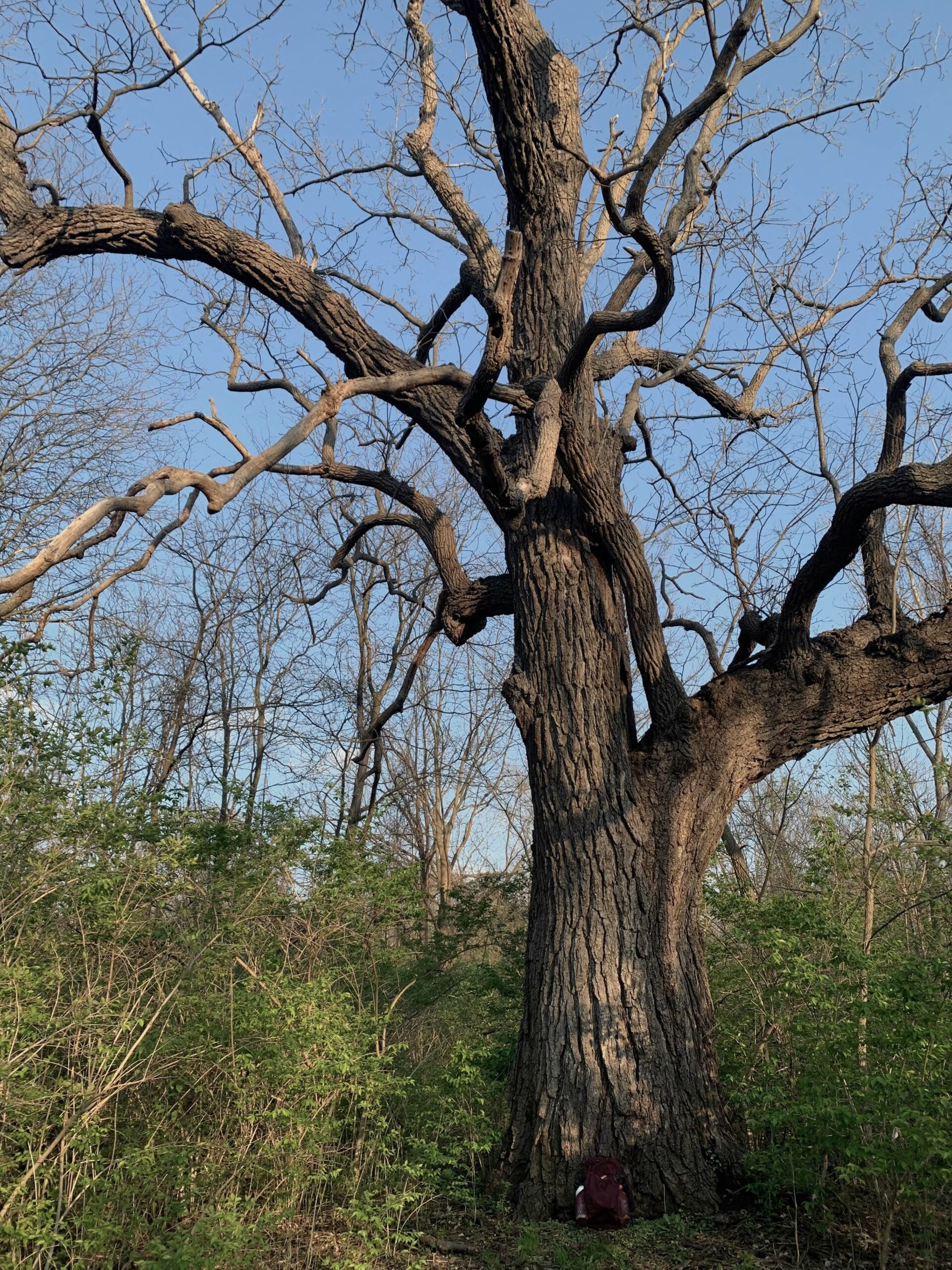
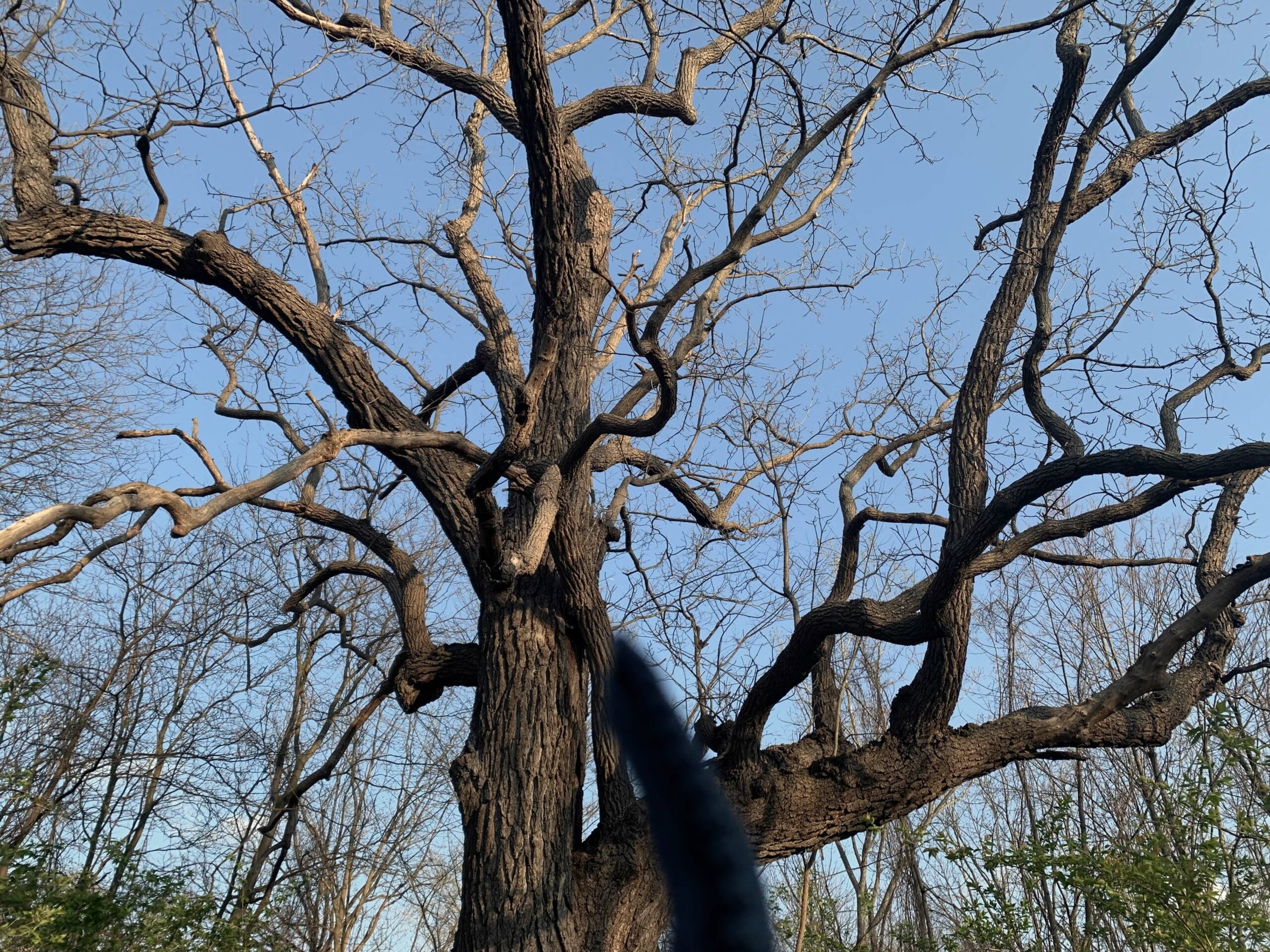
I made my way up the rest of the trail. Towards the very end, just before you can see the exit that spits you out on the other side of the gazebo, was an obscenely tall black walnut tree. It was probably the largest in the entire Arboretum. Unlike the ones that greeted me at the entrance, this one has remained untouched, allowed to keep all of its branches.
It’s probably the biggest tree I’ve ever seen. It must have been at least 35-40 feet tall, probably more. I tried to see how far I could wrap my arms around it (a rather uncomfortable task considering the rather deep, dry ridges of the bark, which caught on the cotton of my sweatshirt). At best, I couldn’t even wrap my arms halfway around the trunk.
The tree split into two main branches, both of which split again. The smaller limbs that branched off were curled and hitched in an almost gnarly way. The ends of many of the branches were bare, bark gone. The absence of leaves would probably be cause for concern if it were a few months warmer. Yet, the other walnut tree, the welcoming one that greets visitors before the gazebo, had a giant burl—sometimes indicative of disease. It’s an odd and somewhat solemn reminder that even those giant, imposing branched figures die; they’re susceptible to disease just like we are, even though they don’t show it the same way.
Movement
From this side of the trail, I can hear the other road that eventually leads past Main Street. It’s the same howling of tires and the same reminder, mirroring the sounds heard at the other end of the trail. No matter how large the forest, there’s usually some kind of path that will cut through it, whether it be a paved road or a trodden trail. As a group, humans don’t tend to leave a place unchanged; as an individual, the changes I left were minimal—footprints in dirt, microscopic cotton fibers on bark, and a few twigs crunched underfoot—but they’re changes all the same.
As I left the Arboretum and began the rather long walk back home, I reflected on a quote from Aristotle that one of my professors mentioned a few days before, “there is no time without change.” Drawing from this, I’d like to contradict the common poetic sentiment that time seems to stop or slow when you encounter nature. Regardless of perception, time doesn’t stop or slow. There will always be constant movement and change—the cutting of branches, the flying of birds, the trodding of trails, the losing of bark, and the building of roads—there will always be the constant passing of time.