Walden: In practice…

I want to start this by saying I have never been more aware of my goldfish-level attention span than during the process of collecting data for this assignment. I also learned a lot about where my train of thought goes and why it goes the way it does. I think due to my psychology classes I’ve taken, I should’ve been way more aware of my brain activity in general, but nonetheless I will discuss my findings.

Parallel Distributive Processing

From what I can remember from class, Parallel Distributive Processing is the mental map your memory uses to determine the meaning of different stimuli that your senses are intaking. This means when you see, for example, Snoopy in a Charlie Brown cartoon, your brain is sorting through everything it already knows to figure out what you’re looking at. The ‘parallel’ part means its making these connections all at the same time until it finds what it’s looking for. The train of thought might be dog -> beagle -> cartoon -> peanuts art style -> snoopy. Or, some people might notice that it’s a Peanuts art style first, and then identify Snoopy based on that starting point. Most people make a web of all their prior knowledge thats relevant to the stimuli almost immediately and all at the same time. This makes it very hard to track a single flow of attention, but I have tried my best.

To What Extent Was I Able to Live Comfortably?

My personal approach to collecting data was to set aside the hour of 8pm-9pm everyday for a week to record my attention that way it was more consistent and I wasn’t torturing myself being 100% mindful of distractions all week, although I can say that it did make me crazy even not during that hour of the day because I did end up being CONSTANTLY aware of it. So that was a fail. Honestly it made that hour of the day really unproductive because I kept either stopping what I was doing to record something in my journal or I was following a rabbit hole on purpose because something interesting had caught my attention that I normally wouldn’t have pursued. For example, I spent ~15 minutes googling the effects of plants on productivity because I had noticed I was zoning out a lot looking at the plants around me in Bailey. From my journal:

"zoned out lookign at the fake plants in bailey a lot. why are they even here if theyre fake?? would just get back to work but i might as well look it up. ok looked it up- apparently plants increase workplace productivity by 15%, but thats coming from a website that specializes in designing plants for workspaces soooo reliable prob not but maybe. did not doubl check. went back to my work."

I honestly don’t think distractions like these took away from my autonomy or comfortability at all because if anything I was engaging with my train of thought instead of shutting it down for the sake of mindfullness.

Navigating Digital Enviornments Going Forward

This assignment has made an immediate and lasting impact on how I navigate both real life and digital spaces, as you’ve already read. I walk through life with a much more mindful approach now, I even set a time limit for my social media apps because that kept coming up in my data as a distraction. Specifically, Instagram was mentioned the most times, with Pinterest as a close second, and Tiktok as the third. I am very grateful for this opportunity and this class as a whole.

Where Attention Goes, Life Follows

In present-day society, we have so much accessibility to things that take our attention away from real life. Having access to all of this technology and apps like TikTok, Instagram, Facebook, etc., causes most people to be distracted from their lives and things that really matter. When things get stressful, most people’s first reaction is to distract themselves by using technology and social media. Social media has the power to completely take our minds off of real life, for hours at a time, without us even noticing it. This week, I have paid attention to and tracked what I give my attention to and how often my attention was interrupted, redirected, or captured by other things. I kept track in my journal files each day about what I intentionally chose to focus on and what demanded my attention. This exercise taught me a lot about myself and how much or what things take my attention away. It is easy to assume that distractions come from me being lazy or procrastinating, but it was important to remind myself throughout this process that a lot of the things that take my attention are designed to do just that.

My Attention this Past Week:

One category I made sure to focus on was when I would focus my attention on something intentionally. When I sat down to do schoolwork this past week, I was intentionally putting my attention towards it. I would say doing schoolwork is something I feel forced to attend to, rather than agreeing to attend to, which definitely has an effect on my attention span while doing it. My assignments I have had this week were pretty light, like one-page papers, or filling out graphic organizers. These assignments would typically take me about forty-five minutes if I had full attention consistently throughout doing them. I chose to do these assignments in my living room, while the television was on, my phone was beside me, and my roommates were there. While focusing my attention on my schoolwork, it had gotten drawn away many times to the television and to talking to my friends. An assignment that would usually take me forty-five minutes ended up taking me an hour and a half, just because of these distractions. It makes me curious if I would’ve made my time more useful if I focused only on my schoolwork and got it done quicker and then hung out in the living room after, or if doing my assignment the way I did it made my time more useful because I could hang out with friends and do schoolwork at the same time.

As I mentioned earlier in the introduction, social media is a huge attention grabber in society nowadays. I made sure to track my social media usage throughout this week, and it was definitely an eye-opening experience. I spend multiple hours of my day on social media, averaging about three hours a day, more specifically, on TikTok. TikTok is the main social media app that takes my attention, as it is designed in a way to keep your attention for long periods of time without you realizing it. It gives you exact videos that it knows you’ll enjoy, and shows you these videos one after another at a fast pace, which are qualities that cause me to spend hours at a time on the app. I find that it is much harder to take my attention away from TikTok, than it is from my schoolwork, which I assume is because schoolwork isn’t designed to take your attention, while TikTok is. It is also very clear after observing my social media usage that a lot of my life is being used for watching other people’s lives, instead of experiencing my own. This is something that most people experience at this current time, and it does make me feel uneasy about the direction we are going in as a society. I think a common thought that people have, including myself sometimes, is that we think that we’re still having experiences while watching social media, as there are good qualities like connecting with others, educational content, etc. And although these qualities of social media are good and can be beneficial, it is still very clear that social media, for the most part, takes away from our lives more than it adds to them. After observing my social media usage throughout this week, I will be paying more attention to how often I am using social media as a distraction, and I will be working towards using it a lot less.

What I Learned:

Life really is what we make it, and life consists of what we put our attention towards. The hardest part of redirecting where you put your attention in your everyday life isn’t identifying that there is a problem, but it is actually making changes that stay consistent. I firmly believe that social media is an addiction, and I know that a lot of my attention in my life goes to social media, instead of real-life experiences. This experience has taught me how much I want to make these changes, because I want to experience my life to the fullest. It is easier said than done, but I think society would improve tremendously if everyone made at least some improvements to what they put their attention towards and how we live our lives.

Attention Deficit

Introduction

I have a terrible attention span. This is a fact, printed in ink on my medical records. I am prone to distraction, and focusing for a prolonged period leaves me fatigued and irritable. My phone is as much my enemy as it is my friend. I use it to read, listen to music, play games and connect with friend globally. And yet it serves as the biggest time sink in my life. Having the world at your fingertips has as many boons as it does consequences. Sometimes I wish I could follow in the footsteps of Thoreau and cast aside my technology, retreating into the woods where digital distraction can not follow. And yet this dream remains unrealistic in a world where everything from my classes to my therapy appointments to my taxes require a wifi connection.

Distractions, agreed and unagreed

Keeping track of my attention has made me understand exactly how reliant I am on my phone. When I woke up in the morning, instead of getting ready and using my time productively I often got distracted checking notifications or taking “just five minutes” to play a game. When spending time with friends or attending events on campus, I found myself scrolling through Pinterest (the one social app I let myself use) or refreshing the same page repeatedly as if something new would turn up. Even walking to class was distraction prone. I would open my phone to put on a radio station and flip between them for a while, unsatisfied with anything on. Still, all of these were objectively “agreed upon” distractions. They were things I (conciously or unconciously) gravitated to, without external influence.

In fact, unagreed distractions were few and far between. I was scarcely subjected to ads while browsing (the exceptions being a scarce few on the radio) and was barely torn away from focus by unimportant notifications. Perhaps one could blame the algorithms, but even in that case much of the time I spent online existed outside of them, playing mobile games or reading webnovels. This I can fully credit to my belief in curating my web experience, and in snuffing out uninvited distractions before they can cost me even more time.

The curated web

A major lesson I had to learn for navigating the digital world as someone with a terrible attention span is the importance of curating my web experience. On both my computer and mobile browsers I employ ad block liberally. I use a proxy service for Instagram that allows me to disable reels and the explore page. I pay for ad free music on Spotify, but also listen to free ad free web radio. Any non essential notifications are either limited or disabled. And most beneficially, I have certain websites or apps blocked, either for part of the day or in general. When I recognize an app or website has become a time sink, I consider how useful it really is to me and often cut it out of my life completely. We can’t fully controll what an algorithm desides to show to us. We can, however, decide that some algorithms are not worth it.

Final reflections

This was a difficult project for me. Focusing on anything is a task. Remembering what I had been focusing on even more so. However, I was able to gain a lot from it. I’ve been able to confirm the effectiveness of the preventetive measures I take for avoiding distractions, as well as recognize the moments throughout the day that I should move more conciously through. Inattention may be a part of my life forever, but I have already and will continue to find ways to minimize the time I lose to it. A metacognitive approach like this is a key first step in recognizing these areas for growth.

Is My Brain Broken?

My Attention Span

My whole life, I’ve always had a relatively shorter attention span. I’ve had difficulty focusing in school, listening to my friends tell me long stories, and often interjecting my own thoughts at inappropriate times. I’m sure that my attention span has only gotten worse as I’ve become more accustomed to digital spaces. Our mobile phones invade our lives and are some of the biggest distractions from our surroundings. It’s become more and more prevalent as the technology got better, and we can now have miniature laptops in our back pockets at all times. Hence why phones are banned in classrooms in New York State. After paying attention to my attention in a digital enviornment, it’s become pretty evident that my attention span has likely shortened as well since I was a kid.

What I Agreed To Attend To

After years of having certain apps to communicate with others, I’m very accustomed to differentiating notifications from either Snapchat or messages, just by hearing the vibrations. These notifications I usually would let myself be attentive to, especially messages, because in my head, “if someone is reaching me on messages, that must mean it’s urgent since they aren’t texting me on Snapchat.” Other buzzes and bings I can usually ignore. I’ve also noticed that if I am reading an article, or shopping online, it’s like I’ve developed a sort of tunnel vision to instinctually block out obnoxious advertisements. Especially the ones that pop up mid-way through an article, it’s like my fingers know how far to scroll before my brain can even evaluate what the ad is. Similarly, if I’m scrolling through Tik Tok, I automatically scroll past ads for the Tik Tok Shop, and livestreams, especially because they’ve been promoted so much more in the past year or two, compared to four or five years ago, where you would have to really search for livestreams and Tik Tok Shop didn’t exist. It’s almost impressive how much of these distractions our brains can block out with enough practice.

What I Disagreed To Attend To

Unfortunately, as good as I am at ignoring some things, I’m just as bad at letting myself get distracted, or sucked into something on my phone or chromebook. During classes especially, I sometimes really need to fight myself not to play games on my chromebook and to really focus on the professor. I always feel terribly disrespectful when I realize I’m not listening, so I try to be extra attentive afterwards. But to follow that, I spend so much effort in trying to make the professor know that I’m listening to them with manual cues like nodding my head and making eye contact, that I’m not actually hearing what they’re saying. It’s very frustrating. Other distractions that aren’t as time consuming for me are my note taking abilities. I am horrible at taking notes and always have been. I’ve made efforts to improve it like color coding and only writing what is important, but when I try to do that digitally, I sometimes get too sucked into the format of my page or the font size, that I fiddle with that too long and miss what the professor said. It’s also become way to easy for me to completely stop doing homework, and just go on my phone or turn on my TV. Which really slows down the process of getting things done in a timely manner, and only adds to my procrastination.

How I’m Trying To Fight Distractions

I’ve been in an ongoing battle of fighting distractions for a while, and looking for the best tools to battle these distractions and get into a more focused mindset. One thing that helps me get homework done, is either separating myself from my phone, and closing extra tabs on my browser, or turning on the “work” feature on my iPhone. This feature only allows some notifications that may be related to what you’re trying to complete, like emails, or it’ll let through important messages from other people, if they chose to force send it through. Both have helped me focus on completing assignments. I’ve also been working towards lengthening my attention span. Rather than endlessly scrolling on Tik Tok, which is all short form content, I’ve been opting to put on a T.V. show, movie, or a youtube video that’s longer than ten minutes. Sometimes this fails me and I go on my phone, but most often it fails me when I realize I wasn’t listening to the show, and was thinking about something else, and I have to rewind a minute or two. But I have noticed that the frequency I’m distracted has decreased from averaging around 5 distractions/10 minutes to about 2 distractions/10 minutes when I’m watching longer form content. I started marking down in a notebook when I watch longer media on March 31, 2026, so I’ve accumulated almost 3 weels of data to pull from. That itself had become a distraction, but it’s more of an allowed distraction. I’ve also found that using a quiet fidget in some of my classes that don’t appeal to me has kept me focused on the professor, and I only put it down to write down the important notes. So in turn, my notes have also improved slightly.

Did My Distractions Impede On My Life?

Doing this project has made the answer to that question very clear. Yes the distractions impeed on my life. I’ve stopped paying attention to the things around me, like the beautiful sky, or the birds singing on my way to class. It’s hard to enjoy those views when you have music playing in your ears and your nose in a screen. It’s also taken away from my education, which is most important. Even if the class is unappealing to me, I should be able to walk out feeling like I learned at least one thing, and there were days where I would walk out wondering why I even drove to class. It somewhat feels like I’ve lost a Cold War to technology and iPhones. But it is eye-opening and I have strategies to improve myself and my mind. I feel so chained to my phone in so many ways I never fully realized before. People can talk to me at any time, even if I don’t really want to talk to them and my family and friends can track my location whenever. There’s always a pressure to post things on social media as well. It feels like there’s no more secracy to my life, even as someone who is very open-book, there doesn’t seem to be much privacy for people anymore. I do think that changing my distractions will help me negotiate my digital expierience, and that I can have a healthier relationship with these distractions. I’m definately going to keep working towards autonomy over my distractions. If all these other tools fail to help me, I could always live off the grid on a small farm and become Amish.

How does our attention get pulled away?

It is no secret that we live in an age of distractions and short attention spans. “Doomscrolling,” the word for finding yourself sucked into social media for much longer than you ever intended to be, is a household word at this point that just about every single person has experienced. In all fairness, most of these distractions, social media or otherwise, are literally designed to keep your attention. You are motivated to keep going through those little dopamine rushes that most of us are also becoming aware about. However, we certainly have motivations to not get distracted, especially since most of us are in a college environment. We have grades to think about, and a limited amount of time in our days most of us would rather spend with friends. How often do distractions actually win out, and how much are we enabling these distractions?

Procrastination

In my personal experience, I find myself most vulnerable to digital distractions as a form of procrastination. If there is something I do not want to do, then I am more likely to spend more time on my phone or more likely to pull up a sudoku puzzle on my computer instead of reading the Walden text that was on my screen before. This only gets worse if it is an assignment that I feel like I am going to have a particularly hard time on. I am going to dread the extra amount of work, but I do know that I still have to start it at some point. This is where I give myself the digital distractions that I do agree to attend to. They are the limited distractions that have a time limit. I will only do the amount of sudoku puzzles that are available in the New York Times. I will only scroll on Social Media until my screentime count kicks in. Are these time consuming and distracting? Absolutely! But they are distractions that I am actively allowing myself, as I do enjoy them and because I have the belief that they will end. I am living my life under the dictates of the distractions I allow myself. Unfortunately, the one that gets out of hand is the screentime one. It is where I fall victim to a trap that a phone has set for me. See, when you set an app to only give you an allotted amount of screen time every day, and that time runs out, the phone does not immediately kick you out of the app. Instead, it gives you four options. Only one of the options will shut the app. The other three options allow you to extend your screentime, as well as to shut off the screen time limit for the app for the rest of your. All it takes is a simple thoughtless tap. Now, yes, when I am making the choice to extend these times when I tap “fifteen more minutes,” which I especially do when dealing with a particularly threatening assignment on the horizon and want to reset that timer. However, this choice is made under deliberate pressure of someone who designed this option, who most likely did so with the intention of making it easier to override. People who have screentime limit most likely due so because they have trouble self-regulating, so making the option to override is able to be done so thoughtlessly makes it feel like an intentional trap. A more concerned part would have made override more difficult, like having to go directly to “Settings” to override it, so a user would be forced to give themselves a moment to think about what they are doing and possibly change their mind. The current design is deliberate pressure intended to keep me distracted.

What makes an assignment seem intimidating or easy to get distracted on?

Now, I tend to allow myself distractions on certain assignments more than others, which is interesting. I had a heap of assignments, both intimidating and not, last week, so it was pretty easy to analyze why that is. The assignments that are always the least intimidating are usually the reading directly from the modules in this very class, English 340, such as the IIIF Images module from last week. These are the assignments that I never had trouble starting or finishing. I think this is because they were usually pretty short, so it was easy to hype myself up and get them done. More than that, they usually came along with instructions to follow on VHS Code as you read, so they kept one engaged Another assignment that I do not get distracted during is reading out of a physical book, particularly a novel. I am attempting to read the novel Muck for my Bible as Literature class without getting much of a schedule, but I am reading two chapters a day without any distractions. This is because I enjoy reading, and because it actively takes me away from any screens that may want to take my attention away. The assignments that are intimidating and that I find myself getting distracted by are two particularly difficult reads that happened to be on my schedule last week, and pretty regularly. This is Walden and the Bible. They are intimidating because they do not keep my attention. They are rambling and repetitive, and though I can see the beauty of their ideas, I know it is going to take more focus and effort to read them than I am occasionally willing to give. It is being bored in an assignment that makes me open to distraction in this case, but I would say that getting distracted during these texts is certainly more something I agree to do than hesitating to start them, even though both are common. The absolute worst offender of intimidating assignments are newspaper articles. I am member of the Lamron, which usually means I am writing at least an article weekly. Last week, I took two articles, one of which was in the News. You need a lot of sources to write for News, and rightfully so, but that means these articles come with a lot of research. That makes it daunting to start, and when you actually start writing, it is so easy to get distracted by the random questions that pop into your head when your cursor is already at the search bar.

Distracted from Distractions

Here is a fun little corner I ended up backing myself into last weekend. Feeling burnt out from both social media and my workload, I made myself a little deal. I would start my homework after I finished a drawing I had been wanting to make (“It is not procrastination if it is productive!” What a beautiful lie we love to tell ourselves as we clean our dorms to avoid that essay). Now, that is not a “digital distraction,” but it was certainly one that I agreed to attend to. At least, for the most part I agreed. In an ideal world, I would have sat down, finished my drawing in a timely manner, and moved right along to my homework feeling refreshed and rejuvenated. Unfortunately, I encountered a problem because of the fact that I usually use reference photos while I draw, so my phone was right next to me and I was glancing at it quite a lot. This made it easy to distract myself in the same way I could while researching for an article. I am already on Google, so what’s the harm in typing in that one random question that popped into your head, and accidentally falling down that rabbithole of link after link that has nothing to do with the task at hand.

In conclusion, it seems like knowing these distractions are available makes it harder to ignore them. If your screentime reminder is giving you the option to ignore it with just a tap, of course it is easy to say “fifteen more minutes”. If you are already doing something on your computer, and your not having a great time, you start to notice it would be so easy to switch tabs to a little mindless game online, and voila, you are stuck. A lot of it comes down to self-discipline, but we are also living in a world where phones and computers want you to waste time. It gives them money, so of course they are going to make it easy. We are living our lives under the pressure of these distractions, and we have to make an effort to be conscious of where we are putting our attention.

Who’s Really In Control? Attention and Autonomy

The themes in Henry David Thoreau’s Walden truly resonate with me because I too have been trying to live a more present and intentional life over the past year. In my second semester of college I experienced intense anxiety and I was looking for ways to enjoy life again. I deleted social media and found myself trying to take control over my “life experience” in a new way than I had before. I returned to activities that I once loved as a little girl like coloring, sitting outside and watching movies. However, despite my lifestyle change of deleting major social media platforms like Tik Tok and Instagram, this past week I have realized that distraction still finds a way to sneak into my daily activities. In documenting my attention over the past week I discovered two themes. First, as described by Tim Wu, advertisements and “data collection” are so meticulously catered to preferences and past searches, and my logical thinking completely shuts down when I view one of them. I found myself clicking on an ad or a notification, and browsing on a page I had no intention of being on as if it was my idea. Secondly and arguably more concerning, the capitalistic, uber productive society we live in causes a feeling of urgency when performing tasks or making decisions. I realized, when I saw the notification of an advertisement come across my computer screen, it was as if there was a magnetic force pulling me to check what it was. When clicking on an advertisement feels like life or death, we know we have a problem.

It’s funny how even when I was deliberately paying attention to my attention, my mind was influenced by forces of our impossible digital environment. Multiple times this week, I fell victim to algorithms that cater your online feed, your taste and what you desire. While researching supplies I needed for my lesson plan on Amazon, I suddenly found myself shopping for headbands. Amazon has features like “you might also need” and “bundle these items” that distract you from the thing you intended on buying. Even the feature that shows what you searched prior when you go to look for something new is a reminder of whatever materialistic thought you had yesterday. At this moment I paused, because while I was trying to research something for an important school project, I found myself online shopping for a headband that I had decided previously I wasn’t going to get. The distraction of seeing the headband I was looking at earlier threw me off so much that I forgot I made the logical decision not to get a headband because of trying to save money. These uninvited advertisements interrupted the thinking of my logical brain, making me forget that previously I decided I did not need one.

This past week, every time I sat down to do work, the ding of a notification or the icon on my computer interrupted my focus. On Tuesday this happened four times while I was completing an assignment. Almost every time I received a notification from pinterest, sephora or an email from a store I immediately clicked on it as if I was desperate to get away from my assignment. Sprinting as far away from my boring homework as I could, my mind was stimulated by the sight of brightly colored, aesthetic products and clothes. Of course all of the emails I receive are products I have looked at or absolutely love, keeping me hooked as if I have to keep looking. My algorithm knows me so well, sometimes I think better than I know myself, and that catches me even when I don’t intend on shopping. Algorithms trick your brain into believing that this is the route it wants to take as if it was you who had the thought to search for a random product. Through this study, I realized that most of the time when I think I am choosing to take a brain break from my work and maybe look at a shopping site online, it is my phone that encourages this. It truly made me analyze what decisions I make for myself based on my own free will or which ones I make because I am influenced by my digital environment.

The results of this project were concerning, as I truly realized that my digital environment, the constant advertisements, and data collection have more control over my life than I thought. I’ve never really worried about AI taking over the world, but if the digital world around me is shaping my behavior and autonomy that starts to feel uncomfortably close. I realized that while I thought I was able to “live my life” based on my decisions, of shopping for my school project and taking a break from studying, these choices were all suggested to me by digital pressures.

Unfortunately, I think the pervasive distractions that come with living in such an advanced technological age are inevitable. However, this project has opened my eyes to how oblivious I was to them influencing me on a day to day basis. I intend to be more mindful when I feel myself influenced to click away from whatever I intended to do. I think as a society we need to continue to have these discussions of the extent to which platforms can track our data and use advertisements and that we have structured legislation as suggested by Tim Wu. Going forward I strive to be mentally tougher and resist the urge to experience something if I didn’t intend to in the first place, because we have one life and I want to be the one deciding how to live it.

Blast From The Past Through Transcribing

Screenshot 2026-04-17 9.57.54 PM

What I transcribed

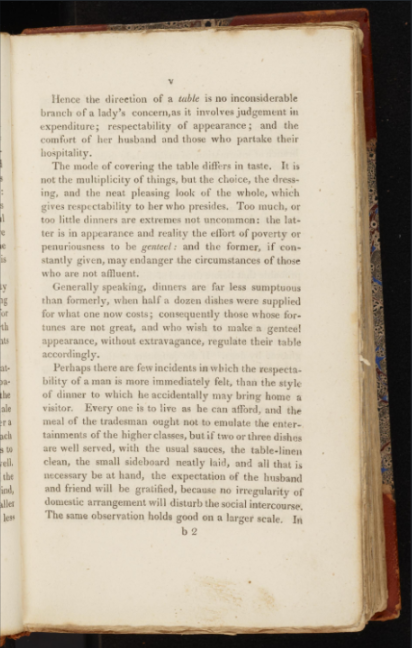
I unfortunately missed transcribing in the Colored Conventions campaign, so I searched for other projects I could transcribe through. I found projects through the Library of Congress – By The People, and was able to transcribe a page from a campaign that reviewed culinary pages from revolutionary times. The page I transcribed seemed to be from a magazine with instructions on hosting dinners, and how to host efficiently.

What I learned from transcribing

I didn’t know much about digitized documents before before I participated in the transcribe-a-thon. I didn’t realize how many documents were still being worked on in these archives. It’s very interesting to me that some of these websites, like the Library of Congress let anyone transcribe for free, and don’t require and certifications. Even if they go through review after transcription, it’s still intersting to me that they would let any Joe-Schmo do this tedious work. But that may also reflect how few people there are that do it, and how desperate they are for people to help, that they take so much volunteer work. One of my biggest challenges transcribing, specifically this page, was ensuring that I was doing it correctly. Making sure I had line-breaks in the correct spots was also difficult, especially if I was in the zone and just typing away, I had to check back in with myself to make sure I was following all the rules.

What I learned about the history these documents embody

I learned a lot about the manners and etiquette of the time period. It has many more rules than we have for normal dinners today. Especially about making sure dinners aren’t too flashy or too dull for the occasion. I was also surprised by the expectations for the guest to match the home that their visiting, whether they are wealthier, or poorer than the host family. I wasn’t very surprised that the magazined seemed directed towards wome, with language that mentions the readers/hosts husband, considering the traditional patriarchial values of the time period.It was very interesting to read into what is essentially the equivalent of our time’s “Teen Vogue” and to see the reading material available to average people.

How I see things now

I definately have more of an understanding for the value in these projects and campaigns. When we are transcribing, whether it’s an authors work, or a promotional ad, or government papers, we learn so much about the era and the way people lived. Transcribing things from authors is similar to getting an insight into their brain, like when we look at the Walden Manuscripts. It’s like getting to watch the process of someone working. I also liked the page I transcribed because it was somewhat relatable. It reminded me of reading my old babysitters magazines about gardening, and reading the columns that had tips and tricks for them, and it’s somewhat comforting that even hundreds of years ago, people were still writting and reading about daily life advice. Working with these documents helps me feel closer to the time period, and makes the people that lived through it feel more real, and less like fictional stories. It’s a good reminder for how people’s lives used to be and depending on the document you’re working with, it could also be a good reminder for how far we’ve come, and how good we have it today comparably.

Do We Choose Our Devices, Or Do Our Devices Choose Us?

Intro

After working closely with Walden by Henry David Thoreau for the better part of this semester, I’ve been doing a lot of self-reflection. One area in particular that I have reflected on is my attention. Specifically, what I choose to pay attention to and what takes my attention unintentionally. Even in the 1800’s, Thoreau warned readers about the advancements of technology stealing our attention from what truly matters. I always knew the digital world took up a lot of my attention, but it wasn’t until paying super close attention to my habits this past week that I realized just how much of it it actually takes up.

Data

One area where I already knew my attention was compromised was in the classroom. I try to pay attention, and some days are better than others, but the moment I get bored or see that I have a text, I pull out my phone. What I didn’t realize, though, was how often I do this per class. So, I decided to take note of every time I pick up my phone during class… and the data shocked me.

Every day (apart from Friday, when I only have class), I have two classes that are about an hour and fifteen minutes long. After averaging my data, I found that I pick up my phone about twenty-one times per day of classes. I also kept track of which app I tend to go on, and it was almost always Snapchat. I also noticed a trend that I pick up my phone more in my classes on Mondays and Wednesdays than I do on other days of the week. This is likely because that my second class on Tuesdays and Thursdays doesn’t allow phones to be out. Then, on Fridays, I only have one class, so there’s simply less time.

Realization

After seeing just how often I check my phone during class, I started paying attention to what actually leads me to pick it up. I soon realized that most of the time, I don’t even do it for a specific reason. Yes, sometimes I see a notification and check it because of that, but the majority of the time, I just pick it up out of habit. It’s almost like I expect something to be there to entertain me. Also, these “quick checks” quickly turn into falling down a rabbit hole of scrolling and missing parts of the lecture.

Analysis

In reflection of what William James says about how our experience is about what we “agree to attend to”, I originally thought that my phone was something I chose to give my attention to. But after this realization, I feel as though it is more of a reaction than a decision. My boredom in class feels like something that can instantly be “fixed” by the apps on my phone, since they constantly offer notifications and distractions. Instead of completely “living my life” based on what I want to focus on, my experience is constantly being interrupted and shaped by these small, digital distractions.

Connection/Reflection

This connects to Thoreau’s warning that new technologies can act as “pretty toys” that distract us from more meaningful things. In my case, my phone is something that repeatedly pulls me away from being fully present, especially in situations where my attention should be focused elsewhere, like class. What stood out to me is that this distraction doesn’t feel extreme in the moment, but when I look at it over time, it adds up in a way that clearly impacts how I spend my time and what I actually take in.

After noticing all of this, I would like to say that I’m going to completely change my habits, but realistically, I don’t think that will happen right away. However, I do think that being aware of how often I am pulled away from what I’m doing is a step toward having more control over my attention. Even just recognizing that these distractions are not always a conscious choice makes me more aware of when it’s happening. Moving forward, I think I’ll at least be more intentional about when I allow myself to get distracted, rather than letting it happen automatically.

Note: I used ChatGPT to help structure this post and improve clarity, but the ideas and reflections are my own.

Attention in the Age of too much

Introduction

Over the past couple of weeks I have kept a detailed journal, tracking the things I choose to pay attention to, and the aspects of my life that cause me to become distracted. In most instances it would be easy to evaluate the ways in which the digital world–whether accessed through my phone, computer, or television–is one of, if not the most distracting element of everyday life. However, I think it would also be interesting to dive into different forms of distraction and specifically the ways in which I have been forced to strike a balance within my own attention. I will–because of its increased effect on my life–look at how digital technology plays a role in stripping me of some autonomy, when looking at attention from an analytical perspective. However I also wish to acknowledge various other forces of distraction and how each are not necessarily negative or positive in their own right. With this post I analyzed the data I collected and came to draw interesting conclusions about the effects the digital world has on my life and forces in life I agree to attend to, compared to the ones that I am forced to look at.

Data of Distraction

Over the course of a couple weeks, I found myself working to strike a balance between staying on top of schoolwork and having enough time to enjoy the aspects of life I deem valuable. Within this idea, I wanted to have an overall beneficial and healthy balance between both parts of my life; However, this balance was most difficult to achieve when I was distracted by my phone or computer. In many ways I already had a deep understanding of the ways in which digital technology most definitely stripped me of independence and uncoerced choice of what I wanted to pay attention to. After collecting data, I looked back and analyzed the various times I was distracted, and though there were moments where I couldn’t put my phone down, or received ads on my computer that sent me on a long winded shopping spree, I found that technology was not consuming me. I documented most of my information based on the balance I would want to achieve, I would specifically take notes of distractions that occurred during my time doing scholarly work and the times in which I was simply hanging out with my friends or reveling in my own hobbies. I found I was more distracted by my phone and computer, though again not as often as I thought I’d be, when I was doing school work, specifically work that, in my opinion, felt like busy work or didn’t strike my attention. I was almost never distracted by technology when spending time with my close friends or when I was drawing, playing instruments, or journaling.

The digital environment that surrounds all of us can become overbearing in many aspects, and because of the constant exposure to this world, it can become increasingly difficult to create a barrier between ourselves and the internet. For me I found it most difficult to separate myself when I was trying to complete certain homework assignments, however in almost every other aspect of my life, I do not feel a deep pull to constantly be scrolling through social media.

Digital technology was most definitely causing me the most problems when it came to different types of assignments I wanted to complete. I struggled to carve out time to read diligently when certain aspects of the assignment seemed difficult to fully comprehend or give my full attention to. Sometimes I was really overwhelmed with the extent of assignments I had to complete and it was much easier to just let myself sink into scrolling through social media. Despite this digital adherence, there were some instances where I was able to fully immerse myself into my work. Reading Walden has been one of my favorite tasks over the course of the semester. When reading, I very much agree to pay attention to Walden and I face limited distractions from my work. There were also many other things that I was able to direct my focus to without the pressure of social media weighing on me.

What I Agreed to Attend to

There have been many other instances throughout the past couple weeks that I’ve kept a journal, where I agree to attend to certain aspects of my life. As discussed by Tim Wu, this has shaped my lived experiences throughout the course of my life and I see that a lot more clearly when looking back on my recorded data. So, what have I agreed to attend to? Looking back over the past couple weeks from a broader, along with a more analytical perspective, I’ve found that I am quite focused on my hobbies, time spent with friends, and being outside in nature. When I am playing guitar, journaling, drawing, or if I’m spending time with people close to me, I am much less at risk of facing digital distractions. I am increasingly more reluctant to go onto my phone, and as I was documenting the distractions I would face during everyday life, they were significantly smaller than the amount of distractions I faced when doing schoolwork. I think that this aspect of attention is crucial to look at. I don’t believe that my life has become entirely overruled due to the existence of constant advertisements and social media being so readily accessible, but I do think that it poses a difficult challenge when it comes to focusing on daunting or boring tasks. Another smaller aspect of my attention that I thought was increasingly interesting was the distractions I faced sometimes came from the idea that in agreeing to pay attention to my hobbies, being outside, friends, etc, those elements of my life drew me away from wanting to focus on other things. Some days specifically in class it would be hard to concentrate when the possibility of everything else I would rather be doing stood stagnant in the back of my mind. I wanted to include this aspect of attention because I believe it creates nuance to the question of whether or not distraction is necessarily positive or negative.

What I was Forced to Attend to

It is easy to agree to attend to things I find valuable and enjoyable. I don’t feel like digital technology strips me of being present from lived experience, but I acknowledge that it makes certain aspects of life feel dull or boring. For me homework can sometimes become a list of chores, rather than a learning experience due to the accessibility and mind numbing convenience of just scrolling through my phone. And I heavily dislike this; I want to enjoy school and bask in learning opportunities because I do truly value it. So I think there are aspects of digital technology that are not beneficial and are simply designed to distract people from living their life in the present, even when that present moment can seem uninteresting. My phone often forces me in some ways to pay attention to things that are not fulfilling or beneficial, but are thrown in my face to a point where it is almost impossible to ignore them. Ads in the corner of websites, notifications from social media accounts, even the constant emails I receive from the New York Times send me down rabbit holes surrounding the modern political climate. In all of these instances I don’t feel that I have gained anything worthwhile, and therefore am being forced to pay attention to certain things.

Conclusion

Overall I found that I was able to live my life as I have been: independently of digital technology and maintaining a balance between focusing on what I need to and what I want to. I found that for the most part, I faced almost no distractions when it came to moments I was outside as the weather got nice, moments spent with loved ones, and times spent alone doing things I enjoy. In contrast to this I did face some distraction when doing homework or reading assigned texts for classes I am enrolled in. Though these distractions were much less frequent then I thought they would be, and were only recurrent when the work felt tedious and uninteresting. I do feel there are many aspects in our digital world that force us to look at them. Whether that appears in forms of advertisements, social media posts or new articles, companies understand how consumers work and design their content based on the accessibility we all have to the digital sphere. Therefore, it is becoming very important to examine the ways digital content is designed to distract you, once we do this it becomes much easier to have control over our attention.

Trapped in the Online World

When it comes to paying attention to what we pay attention to, I found this quote, originally from William James, that Tim Wu used when discussing attention to be relatable. “…our life experience would ultimately amount to whatever we had paid attention to. At stake, then, is something akin to how one’s life is lived.” In the end of our lives, we will look back and the most important things in life, the things that gathered most of our attention and time, will come to mind. Whether this be family, friends, travels, our time in nature and the world, or today, perhaps time spent online, losing and taking away attention from the important things.

This is not to say that the online world is an all-around negative aspect of the modern world that only causes harm, as there are many good qualities and outcomes as to how far society has advanced in technology. However, oftentimes the online world is the easiest place for your attention to be manipulated and turned elsewhere. For example, as I was paying attention to what I paid attention to over the past week, and when the online environment was involved, it often blurred the lines between what I agreed to pay attention to, and what I was forcibly or redirected to pay attention to.

I found when I played a two-minute movie trailer on YouTube, in order to watch that I had to watch thirty seconds worth of advertisements. When my friends and I decided to watch another movie trailer, the same problem occurred, with being forced to watch more advertisements. While these short ads are what helps keep platforms like YouTube running so we’re able to watch videos like movie trailers, the short advertisements you watch throughout life add up. If you watched just five minutes of advertisements every day of the week, whether these are on television, the radio on your drive to work, your phone, computer, social medias, etc., that would be 35 minutes of your week, and 1,820 minutes of your year. Most people one way or another experience an even larger number of advertisements daily, which will end up making up for a large amount of time in our lives.

I also found that when I would look at articles online, whether for school, or travel ideas, I was oftentimes prompted to make an account with the website, sometimes just to access the full article. This isn’t a big deal until you are receiving hundreds of emails in your inbox from various articles you viewed one time over the years. This takes more time and attention away from your life, and the things you truly care about, to clear out an inbox or create an account to read any article you encounter. Along with this, advertisements can pop up along the sides of articles, or when you first enter the website, prompting your attention away from the information you were originally seeking. Alongside this, when algorithms learn your patterns and interests, the advertisements you are shown become harder to ignore and divert your attention from. For example, I was recently reading an article on the best rated light sources for SCUBA divers, but found the website continuously offered distracting advertisements such as “win a free trip” giveaways, or links to equipment I was not researching. This makes a simple task distracting and takes more time to research due to my attention being drawn away.

The worst section, in my opinion, of the online world for attention is social media. Whether it is TikTok, Facebook, Snapchat, Instagram, etc., they are all designed to keep your attention and time on these apps for as long as possible. When you agree to put your attention into social media and just scroll for five minutes, this will eventually turn into an hour, or hours. It has become social media’s entire goal to keep you on their platform for as long as possible, even if it is destroying people’s attention spans and wasting precious time here on Earth. Thoreau greatly emphasized the importance of paying attention to the little things around us, and not letting ourselves get caught up in a fast-paced, never fully pleased world. When you just seek more and more, nothing will ever have any value, and you will stop seeing the important things around you. I think the same applies to social media. I found myself multiple times over the past week getting trapped in the online world of social media, my attention span withering away scrolling through short 15-30 second clips. In today’s world, having the ability to step back and put your attention towards the things you truly care about is difficult, but not impossible. While we may not always be able to control outside factors that try to steal our attention, such as advertisements in the online world, we can control what we intentionally put our attention into.