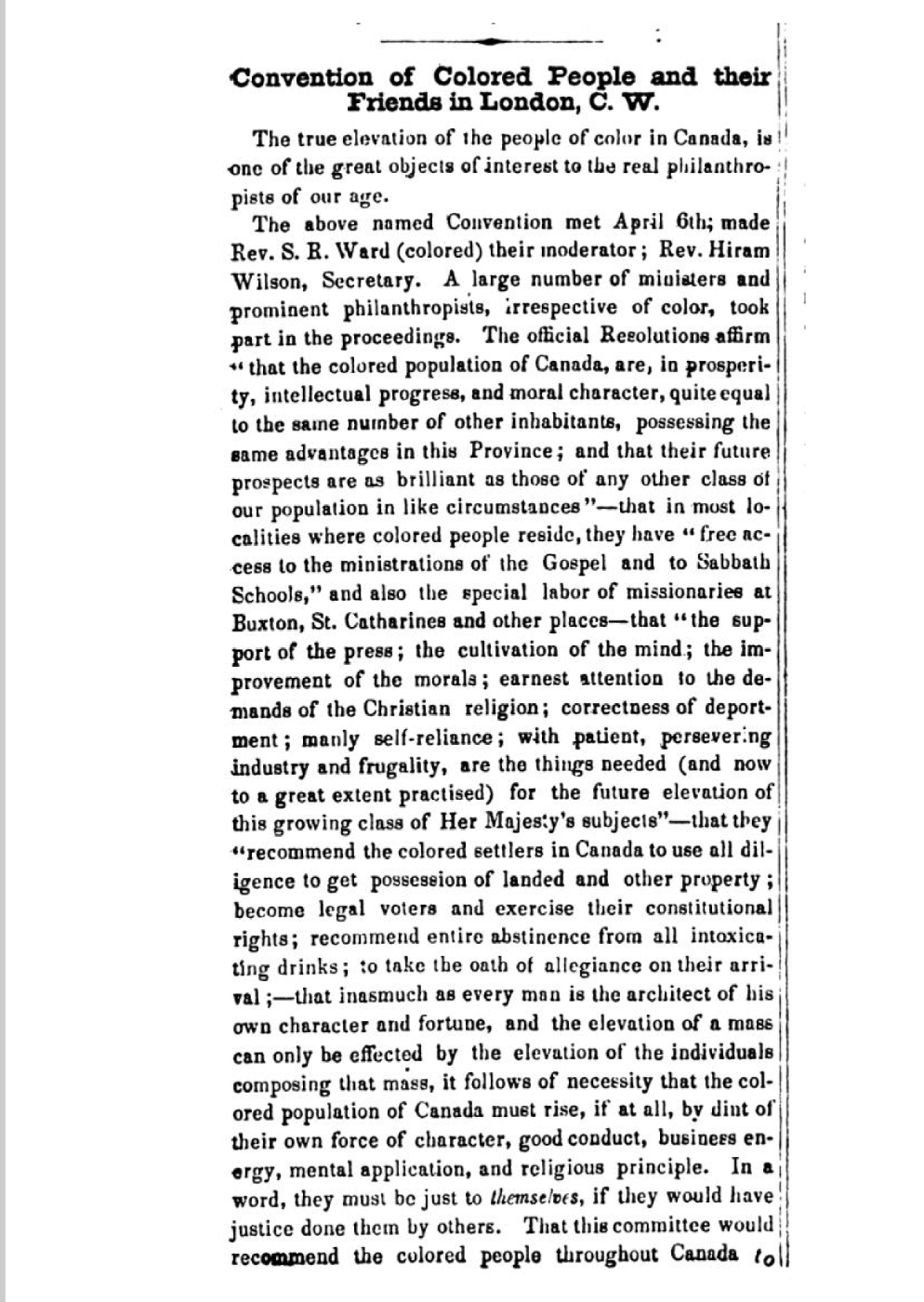
Before participating in the Douglass Day transcribing for the Colored Conventions Project, I knew only the broad outlines of the Colored Conventions movement. I understood that free Black Americans gathered in the nineteenth century to advocate for abolition, education, and civil rights. I associated the era primarily with towering figures like Frederick Douglass and imagined large speeches that made their way into history textbooks. What I had not fully grasped was the depth, organization, and collaborative spirit of the movement or how much of its history lives these handwritten documents.
Participating in transcribing for the Colored Convention shifted my understanding from abstract knowledge to something more personal and immediate. Reading and transcribing convention minutes, resolutions, and reports revealed how strategic and forward-thinking these gatherings were. Delegates debated educational access, labor rights, voting rights, and community uplift with urgency and clarity. These were not isolated meetings but coordinated efforts across states and even international borders. What struck me most was the intentionality behind everything, like how the committees were formed, funds were allocated, and the language was carefully crafted. The movement was not simply reactive to oppression, but it was proactive in building institutions and imagining a different future.
Working directly with digitized archival documents was also eye-opening. Before Douglass Day, I thought of digital archives as polished, searchable databases that were clean and convenient. I did not fully appreciate the labor that makes them accessible. Seeing scanned pages in their original form, sometimes faded, crooked, or partially obscured made me aware of the distance between the past and the present. Digital access does not erase fragility. Instead, it reveals it. Each stain, tear, and irregularity reminded me that these documents survived against the odds.
One key takeaway for me is that digital archives democratize history, but they also require participation. Projects like the Colored Conventions Project rely on volunteers to help transform images into searchable text. Without transcription, many of these documents remain visually available but functionally hidden. I realized that digital humanities work is not passive consumption, but it is collaborative preservation too. By transcribing, I was helping make history more accessible to others.
Before this experience, I assumed transcription was mostly about typing what you see. I now understand that it is far more complex. Handwriting styles vary dramatically, and nineteenth-century spelling and punctuation can differ from modern conventions. There were moments when I had to slow down and examine each letter carefully, comparing unfamiliar words to others on the page to decode a writer’s script. Sometimes I encountered words that were nearly illegible, and I had to rely on context clues to make an educated guess. The process demanded patience and humility.
One of the biggest challenges I faced was deciphering handwriting that blended letters together in ways I was not used to seeing. Certain capital letters looked unfamiliar, and ink fading made some words appear incomplete. At first, this was frustrating. I worried about making mistakes or misrepresenting the original text. Over time, however, I learned to approach the page more thoughtfully. I zoomed in on difficult sections, reread surrounding sentences for context, and accepted that uncertainty is part of archival work. Transcription taught me to value precision while also recognizing the limits of my interpretation.
Another challenge was emotional rather than technical. Reading discussions about discrimination, exclusion, and injustice written in the measured language of formal proceedingswas powerful. These were not distant stories. Rather, they were lived realities expressed by people who were determined to claim their rights. Transcribing their words required me to sit with that reality longer than I might have if I were simply skimming a textbook. It made the stakes feel human.
Overall, engaging with these archival documents changed my relationship to this history. Instead of viewing the Colored Conventions movement as a footnote within the broader abolitionist narrative, I now see it as a foundational force in American political organizing. The conventions were spaces of leadership, intellectual exchange, and collective strategy. They demonstrate that Black activism in the nineteenth century was not spontaneous. It was organized, visionary, and sustained.
The act of transcription itself deepened that connection. Typing each word felt almost like listening carefully to voices from the past. I became more attentive to phrasing, tone, and emphasis. I noticed how resolutions were structured and how arguments were built. In slowing down to transcribe, I engaged with the material more closely than I ever would have by reading alone. The process created a sense of responsibility.
Douglass Day, which honors the legacy of Frederick Douglass, takes on new meaning for me after this experience. Celebrating his life is not only about remembering a single influential leader. It is about recognizing the broader networks of activism and community that sustained the struggle for freedom and equality. The Colored Conventions Project highlights that history is collective. By participating in the transcriptions, I became part of that collective effort in a small but meaningful way.
In the end, what I learned extends beyond historical content. I learned that archives are living spaces of engagement, that preservation requires participation, and that careful attention can transform how we understand the past. Transcribing these documents was not just an academic exercise, it was an act of witnessing. It reminded me that history is not fixed on a page; it is carried forward by those willing to read, interpret, and share it.
Douglass Day gave me more than new information. It gave me a deeper appreciation for the labor of preservation, the power of collective organizing, and the enduring relevance of voices that refuse to be forgotten.