
Throughout Walden, Thoreau writes, cuts, sharpens, and reshapes his own language, which tells us what he wants his readers to understand. This is clear in the “Spring” 
 chapter , where his manuscript drafts and the final published version reveal a shift toward clarity, purpose, and cyclical thinking.
1.Thoreau removes excess, repetition, and hesitation so spring becomes clearer, more purposeful. In the manuscript  , Thoreau writes in his manuscript draft of the ground becoming “completely partially bare of snow.” and a long, wandering list of plants. These repeated phrases like, “as if not till then their beauty was ripe” appears twice. While in the published version, he tightens the language to “partially bare of snow.” The lists are shorter and more organized and the repeated “ripe” metaphor appears only once. Thoreau’s revisions make spring feel more decisive and direct. Instead of a hesitant, cluttered transition, spring becomes a clear moment of renewal. This supports that spring models the kind of purposeful renewal humans must choose in society.
2.He then goes on to remove the chaotic, tangled ecosystem catalog and replaces it with a more balanced, harmonious one. The manuscript  lists off these elements, “asters, goldenrods, thistles, sedges, reeds, rushes, wild oats, cotton grass, cat-tail, mulleins, hardhack, meadow-sweet”. The draft is sprawling, almost overwhelming, like an ecosystem in full complexity. He simplifies in the published version
  to “life-everlasting, golden-rods, pinweeds, wild grasses, cotton-grass, cat-tails, mulleins, johnswort, hard-hack, meadow-sweet.” The revision shifts the tone from chaotic abundance to a coherent interdependence. In a similar way, society functions like an ecosystem, but one whose patterns can be recognized and understood, not random or overwhelming.
3.Thoreau also removes the architectural comparisons’ complexity and keeps only the essential metaphor. From the manuscript version  of this section, he uses the Greek classical order of architecture, such as ionic, corinthian doric, and composite. Whereas in the published version, he refers to it as “an antique style, older than Greek or Egyptian.” When making this change, Thoreau simplifies the metaphor so it’s not about showing off knowledge, but rather it is about making a clear connection between natural forms and human cultural forms. This change also represents how human society mirrors natural patterns.
4.In the published version of Walden, In the original manuscript  the sentence, “laws and figures which first existed in the mind of man.” is a long philosophical sentence about astronomy, which he then replaces with a cleaner analogy in the published version, “…have the same relation to types already in the mind of man that astronomy has.”. This revision makes the analogy sharper while also reflecting on the patterns of nature already present in the human mind. These patterns show how humans instinctively follow natural cycles, renewal, hesitation, and conflicts just like ecosystems do.
5.Another revision in the published version of Walden that is important to make note of is how Thoreau keeps and strengthens the final contrast of winter as gentile, not tyrannical. In both versions of Walden, Thoreau keeps this claim about winter, however the published version can be perceived as much cleaner than the manuscript. In the manuscript  , winter is referred to as “rude and boisterous tyrant” but in the published version, he reframes it as “gentle, delicate, tender”. This revision emphasizes the importance of recognizing winter not as an enemy of spring, but rather that winter is necessary in preparation for spring. Thoreau’s revision to this specific moment also brings light to the conflict that stagnation in society is not an endpoint, but rather a part of the stages that lead to renewal if people can recognize the cycle.
The revisions make spring’s emergence more focused, cyclical, and interconnected, reinforcing the idea that Thoreau uses spring to model how society functions like an ecosystem whose progress depends on recognizing natural patterns and choosing renewal, action, and cooperation.
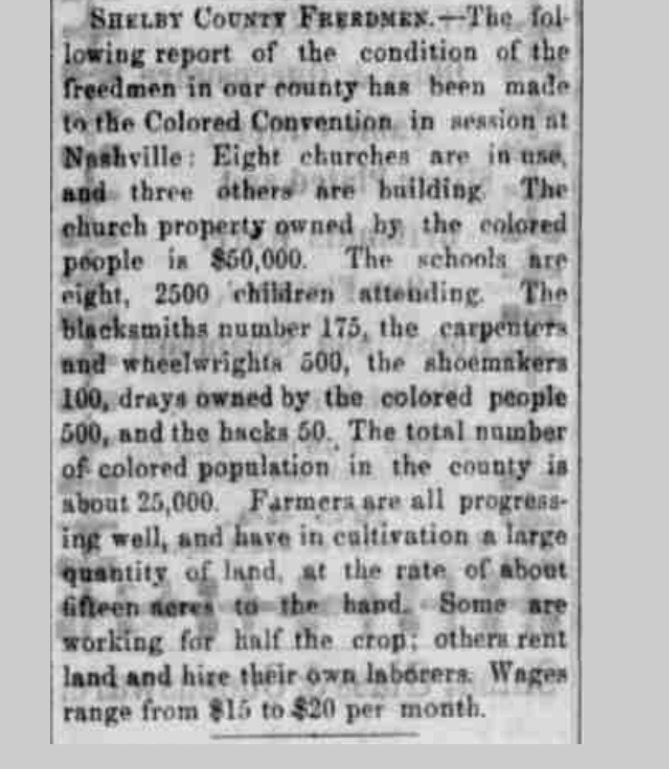
 These meetings were not informal or symbolic, they were serious and strategic gatherings. Delegates debated issues like education, voting rights, and economic opportunity with intention and urgency. Reading their words made it clear that they were not simply reacting to oppression, they were actively planning for the future. What stood out to me while transcribing these documents was how organized everything was. Motions were proposed, amended, and voted on. Committees were formed, language was chosen carefully, and seeing this unfold line by line made the movement feel very real. It was not just an idea discussed in class or summarized by a textbook, it was a living process, carried out by people who understood the stakes of what they were doing.