Trapped in the Online World

When it comes to paying attention to what we pay attention to, I found this quote, originally from William James, that Tim Wu used when discussing attention to be relatable. “…our life experience would ultimately amount to whatever we had paid attention to. At stake, then, is something akin to how one’s life is lived.” In the end of our lives, we will look back and the most important things in life, the things that gathered most of our attention and time, will come to mind. Whether this be family, friends, travels, our time in nature and the world, or today, perhaps time spent online, losing and taking away attention from the important things.

This is not to say that the online world is an all-around negative aspect of the modern world that only causes harm, as there are many good qualities and outcomes as to how far society has advanced in technology. However, oftentimes the online world is the easiest place for your attention to be manipulated and turned elsewhere. For example, as I was paying attention to what I paid attention to over the past week, and when the online environment was involved, it often blurred the lines between what I agreed to pay attention to, and what I was forcibly or redirected to pay attention to.

I found when I played a two-minute movie trailer on YouTube, in order to watch that I had to watch thirty seconds worth of advertisements. When my friends and I decided to watch another movie trailer, the same problem occurred, with being forced to watch more advertisements. While these short ads are what helps keep platforms like YouTube running so we’re able to watch videos like movie trailers, the short advertisements you watch throughout life add up. If you watched just five minutes of advertisements every day of the week, whether these are on television, the radio on your drive to work, your phone, computer, social medias, etc., that would be 35 minutes of your week, and 1,820 minutes of your year. Most people one way or another experience an even larger number of advertisements daily, which will end up making up for a large amount of time in our lives.

I also found that when I would look at articles online, whether for school, or travel ideas, I was oftentimes prompted to make an account with the website, sometimes just to access the full article. This isn’t a big deal until you are receiving hundreds of emails in your inbox from various articles you viewed one time over the years. This takes more time and attention away from your life, and the things you truly care about, to clear out an inbox or create an account to read any article you encounter. Along with this, advertisements can pop up along the sides of articles, or when you first enter the website, prompting your attention away from the information you were originally seeking. Alongside this, when algorithms learn your patterns and interests, the advertisements you are shown become harder to ignore and divert your attention from. For example, I was recently reading an article on the best rated light sources for SCUBA divers, but found the website continuously offered distracting advertisements such as “win a free trip” giveaways, or links to equipment I was not researching. This makes a simple task distracting and takes more time to research due to my attention being drawn away.

The worst section, in my opinion, of the online world for attention is social media. Whether it is TikTok, Facebook, Snapchat, Instagram, etc., they are all designed to keep your attention and time on these apps for as long as possible. When you agree to put your attention into social media and just scroll for five minutes, this will eventually turn into an hour, or hours. It has become social media’s entire goal to keep you on their platform for as long as possible, even if it is destroying people’s attention spans and wasting precious time here on Earth. Thoreau greatly emphasized the importance of paying attention to the little things around us, and not letting ourselves get caught up in a fast-paced, never fully pleased world. When you just seek more and more, nothing will ever have any value, and you will stop seeing the important things around you. I think the same applies to social media. I found myself multiple times over the past week getting trapped in the online world of social media, my attention span withering away scrolling through short 15-30 second clips. In today’s world, having the ability to step back and put your attention towards the things you truly care about is difficult, but not impossible. While we may not always be able to control outside factors that try to steal our attention, such as advertisements in the online world, we can control what we intentionally put our attention into.
History Meets the Digital World in Transcription

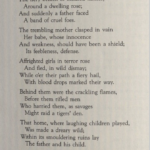
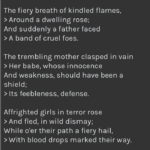
What I transcribed

What did I know about the Colored Conventions movement before I participated in the transcribe-a-thon? What’s the most important take-away for me about the movement itself as a result of participating?

Previously to participating in the transcribe-a-thon, I knew limited information of the Colored Conventions movement. I knew some of the history of Frederick Douglass, the well-known local historical figure, as well as Frederick Douglass Day which we celebrate and remember him by at SUNY Geneseo. However, I had not known of the connection to this important day and the Colored Conventions project. In participating in the transcribe-a-thon, while also learning information about the convention in class, I learned that the projects name is based on the many political meetings held by African Americans after the Civil War, in which they campaigned and fought for basic civil and human rights. The name Colored Conventions comes from these meetings as a way to honor and remember that part of history. Over 600 Colored Conventions were held, and it is estimated that over 10,000 delegates attended. In holding the transcribe-a-thon and making it a yearly tradition for people all over the world, the memory and history is being kept alive through the eyes and personal accounts of the people involved. Documents being transcribed come from firsthand accounts of historical figures such as Frances E. W. Harper or Frederick Douglass, and many other influential people of the past. The digital world we live in today helps make it possible for anyone to access these documents and learn more about history and participate in a tradition that helps to keep history alive.

What did I know about working with digitized archival documents before I participated in the transcribe-a-thon? What are some key take-aways for me about digital archives as a result of participating?

Previously to participating in the transcribe-a-thon, I had limited exposure to digitized archival documents. Occasionally for a class in high school or throughout college I would read an assigned historical diary or record. Through participating in the transcribe-a-thon I was able to see the large number of archival documents that exist, even just pertaining to specific historical figures or time periods. The amount of information and historical accounts often overlooked in classrooms can be seen as so many documents exist throughout history, on a level that it would be impossible to cover them all. This is the benefit of the digital world and having these archived documents digitized, though. People can search for specific historical figures they have an interest in, or just scan through a variety of digitized documents from different time periods and people as done in the transcribe-a-thon. Having the ability to do this at home from your computer makes it easier and more accessible for most, especially students and those interested in such digitized archival documents, as those with a computer and internet now can learn as much as they choose and easily narrow in on specific topics.

What did I know about transcribing archival documents before I participated in the transcribe-a-thon? What do I now know about document transcription that I didn’t know before?

Previously to the transcribe-a-thon, I knew nothing of transcribing archived documents myself, and wasn’t aware that this was an event others participated in as well. I have learned that a vast amount of people help in transcribing historical documents, as done during the Colored Conventions Project. By transcribing these documents, people are given the chance to use computers and “…digital tools to bring the buries history of the nineteenth century Black organizing to life” (“Douglass Day at Suny Geneseo – How Do I Transcribe”). While learning about the documents and historical perspectives while transcribing, you are also helping to create a record and keep these parts of history alive.

What specific challenges did I face in doing the transcription? How did I overcome these challenges (if indeed I did)?

Any challenges I faced doing the transcriptions were minor, such as losing my place in longer documents on where I was in the transcription process, which can easily be fixed by rereading what you have written alongside the document. Alongside this I found the website itself to be difficult to work with at times, as it automatically scrolls the document down as you transcribe, which caused me to lose my place on occasion. Finally, I found depending on the document, especially those written in cursive without clear distinctions between letters, to be difficult to read and transcribe. I found it to be much easier to transcribe poems and letters that were already typed, with clear letters and writing.

Overall, how did the experience of engaging with archival documents change my sense of relationship to, or understanding of, the history to which these documents belong?

Engaging with these documents firsthand and reading them through while making the transcriptions gave me a firsthand view into their historical relevance. A lot of the valuable information we know about historical figures such as Frederick Douglass or Frances E. W. Harper, comes from documents they wrote at one point, or documents recounting their speeches/work. While transcribing, you can see glimpses into different historical figures lives and accomplishments. Pieces from documents I would have probably never seen otherwise that I have now learned about, even if just in reading it over once as I transcribed.