Henry David Thoreau’s Walden Chapter 16 Paragraph 4

Regan Russell, Nia Jones, Victoria Slade, Serena Drobnack, Wrileigh Bacon Finding a starting point for this project quickly became the first obstacle that our group encountered. Each chapter of Henry David Thoreau’s Walden has unique paragraphs and changes that would work for this project, so picking just one was a difficult task. Originally our group picked Chapter 16 paragraph 13 and began analyzing and transcribing lines.This paragraph interested us because of the lines “What I have observed of the pond is no less true in ethics. It is the law of average. Such a rule of the two diameters not only guides us toward the sun in the system and the heart in man, but draw lines through the length and breadth of the aggregate of a man’s particular daily behaviors and waves of life into his coves and inlets, and where they intersect will be the height or depth of his character. Perhaps we need only to know how his shores trend and his adjacent country or circumstances, to infer his depth and concealed bottom.” As we began to work on the project we searched for images to utilize for the slides, but quickly realized that the necessary pictures were not available. We had chosen a paragraph that did not have pictures of different versions, we only had one picture to use. This was a large setback for the group, as it meant that we had to restart our entire project and pick a new paragraph to analyze.

Since we had already spent time analyzing Chapter 16 we chose to select a new paragraph within the same chapter. Our newly chosen paragraph was paragraph 4. This paragraph read as “When I strolled around the pond in misty weather I was sometimes amused by the primitive mode which some ruder fisherman had adopted. He would perhaps have placed alder branches over the narrow holes in the ice, which were four or five rods apart and an equal distance from the shore, and having fastened the end of the line to a stick to prevent its being pulled through, have passed the slack line over a twig of the alder, a foot or more above the ice, and tied a dry oak leaf to it, which, being pulled down, would show when he had a bite. These alders loomed through the mist at regular intervals as you walked half way round the pond.” To avoid another roadblock, our first step with the new paragraph was to locate photographs of the paragraph and make sure there were multiple versions available. We were able to find manuscript images of both version F and version G. While these images may be hard to read, the visible changes are still present.

Changes between these two versions are quickly seen, as the very first word in the paragraph changes between versions. Version F begins the paragraph with “Frequently when” but then all following versions begin with “When I”. This change could have been made to remove a limitation that comes with the word “frequently”, with the inclusion of the word the reader interprets that there is a limit or set number of times that the following action has occurred. Thoreau does not want to limit the reader’s interpretation of his words, so he does not disclose to the reader how many times he has strolled around the pond.

Pond in Winter Paragraph 4 Version F

Another significant change between versions is seen in the second sentence of the paragraph between version G and the Princeton version. Version G begins as “He would perhaps have placed an alder branch Over the narrow holes in the ice, which are which were four or 5 rods apart, and an equal distance from the shore, he would perhaps have placed an alder branch” and the Princeton version begins with “ He would perhaps have placed alder branches over the narrow holes in the ice, which were four or five rods apart and an equal distance from the shore,” Even at a glance it is clear that many changes have been made to the beginning of this sentence, as the Princeton version is visually quite shorter than version G. Version G uses words that are associated with the present tense such as “which are” and “he would”, both of these phrases are not featured in the Princeton version. The entire sentence is altered to in the past tense in the Princeton version, now using phrases such as “which were” and eliminating the phrase “he would”. This change to the past tense is an intentional move by Thoreau, the changes portray the nostalgic and daydreaming nature of his thoughts. The sentence is a description of a fisherman ice fishing that he may have seen while strolling by the pond. He does not participate in the fishing of the pond, just watching from afar and taking note of his process. Making this description occur entirely in the past tense shows the reader the extent to which Thoreau appreciates nature and eliminates the idea that Thoreau wishes to participate in the act.

Pond in Winter Paragrah 4 Version G

The paragraph that we chose to analyze truly showed a personal side of Throreau and showcased a small part of his personality. This interested us because it allows for the text to become relatable. While we were searching for a paragraph we read aloud numerous paragraphs that were hard to decipher. Some paragraphs appeared so complex on the surface that time would have been devoted analyzing the content, leaving no time to analyze the changes and choices that Thoreau made. Our chosen paragraph contained a level of complexity that we were able to decipher quickly and analyze the meaning while still leaving ample time to discuss the changes and choices made by him.

Thoreau’s intense appreciation for nature is shown through the way he describes the fisherman’s actions and the absence of his desire to participate in that activity and similar activities. This is part of the reason that our group gravitated toward this paragraph after our initial paragraph fell through. The initial pull to this paragraph came from the number of visible changes and words crossed off in between versions. But as we read through and discussed the contents of the paragraph we realized that this paragraph was an excellent example of intentional changes made by Thoreau to portray his internal thoughts and the overall message that he intended to send to the reader. His changes in this paragraph also portray his desire for some interpretation to be up to the reader. Thoreau makes many intentional points, but at times it is up to the reader to decide what he meant and decipher meanings from stories that can correlate to their own lives. Though we are all college students who may not be surrounded by nature daily, we all could find some piece of Walden that resonates with us and could be seen in our lives. The analysis of Walden and spending much time with paragraph 4 in chapter 16 has increased our understanding of Thoreau and his narrative choices throughout the text.
Can I please stop fearing this whole coding thing?

I think that the biggest “concrete” skill that I’ve gained so far is a meager level of comfort in playing with code. Before this class, I only really messed with “code” in the sense of modding games and sometimes messing with “inspect element” in Chrome just for fun, but that was never really something that I did intentionally. There are a lot of rules and specific ways to write things that was really intimidating to me. I am much more comfortable with this now, especially from having to do the daily journals, even though I frequent the course page to circle back and double check myself.

One of the most important things to me that I’ve garnered from this course ties into what I said above: I feel like I’m much less “scared” of my computer now. I feel a little bit less like I’m blindly trudging through stuff when I try to move files around or download something. I also feel a little bit silly with how much is automated for me when I try to do something as easy as open a Google doc or something- it was so much more complicated and involved on older computers to do literally anything. It gives me some perspective and even makes me feel a little bit bad when I’m impatient with my parents for trying to figure out technology that is second nature to me.

Not that I didn’t really see it before, but I also have a newfound appreciation for people who transcribe and digitize archives. Those people do not get paid ANYWHERE near enough money for what they do. I rely heavily on Gutenberg and JSTOR for both research and fun reading, and without those transcriptions of text I wouldn’t be able to access so many things that I both need and enjoy. I’ve been using Gutenberg since I had a nook tablet back in 2013 and I have remained a loyal user now through my Kindle, and I recommend it to EVERYONE. This class has made me pay closer attention to translation/transcription differences (as well as how each re-reading feels to me) I’ve seen between different versions and modalities of texts I’ve read- for example, I read the Prime Digital Classics version of F. Scott Fitzgerald’s “This Side of Paradise” in the airport over the holidays, and then read it on Gutenberg and in a pdf scan of the original book for a class. I honestly preferred the Kindle version, but for the sake of page numbers I used the scanned one and for the sake of copying and pasting for quotes I used the Gutenberg version. Each modality of the text has its strengths and weaknesses.

Spring, Suddenly

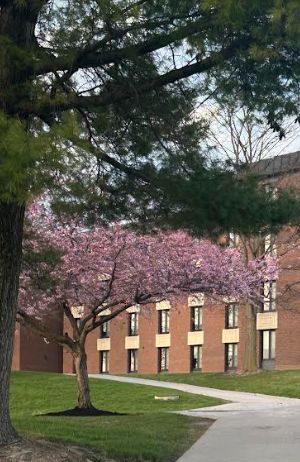
For as long as I can remember, spring has always had a way of sneaking up on me, no matter how anxiously I await it. Somewhere along the line, while I’m too busy hoping for the days when I can step outside and be met with a warm breeze instead of frosted grasses, everything begins to bloom seemingly overnight. And so suddenly, the spring I waited for is upon me now, and the pink budded trees shower me with their petals as I move through my days.This spring’s arrival is not exception; I was shocked when the sweet scent of all thr flowering plants passed me by. My eyes followed its upward waft to see sun soak, saturated colors all around me where the grey of winter once made its home. Instead of usual cloud covered skies and grey bark, I saw a blue horizon and flickers of green leaves.

It’s easy, while in the heart of winter, to believe that the harshest season will last forever. How, in this same place which was once so barren, can life be so apparent, so unabashed, so loud mere weeks later? But year after year, spring persists. If you look for it, you begin to see signs of old seasons, even at the height of new ones. The seeds of April fall over the remaining brown, dried leaves of November, just as the moisture from long ago melted February snow will nourish the sweetest of July’s homegrown tomatoes. The seasons work, as all of nature does, in perfect balance; the whole world sings in perfect harmony.

I wonder, as I watch a bushy tailed squirrel climb the same tree where a firey red cardinal is perched, if the animals can hear nature’s song as I do now. Do they know their roles, how they carry seeds and help new things grow? Do they learn their place in it all as I do now, or are they born with a certainty I have never known?

I hope one day the seasons no longer sneak up on me as they do now. I hope I begin to recognize the way the cold, wet days of March give way to the pollen of spring and the chilled nights of early September make space for golden autumns. Maybe even more than this, I hope I master the ability to let each season be what it is. Instead of wishing away the stiff heat of summer, or complaining that winter’s bitter cold is lingering for longer than I can bear, I hope I can continue to remind myself that each season has a song, perfectly composed, that blends into one another like one long, cyclical piece of music, if only you decide to stop and listen.

The Constant in a World of Chaos

IMG_1494

Sitting alongside nature isn’t a place that I find myself often. Nature is more of a backdrop. The background scene of an event I’ve been waiting for, or the pretty colors behind me in a photo. I can appreciate the beauty that surrounds me, but never take special care to spend intimate time within it.

I tried to think of a place where words would come freely to me in nature, and found myself stuck in the memories that existed within these locations, rather than the intricate beauties that exist among them. The trees in my backyard that remained the backdrop of each graduation photo. The gazebo on the south side of campus where I first met the strangers that would become my best friends. I wondered why the memories clouded the beauty of every scenery to me.

For this reason I took this trip alone. I thought about bringing my boyfriend, or one of my roomates and making a day out of it, but decided that I would instead spend the day with nature.

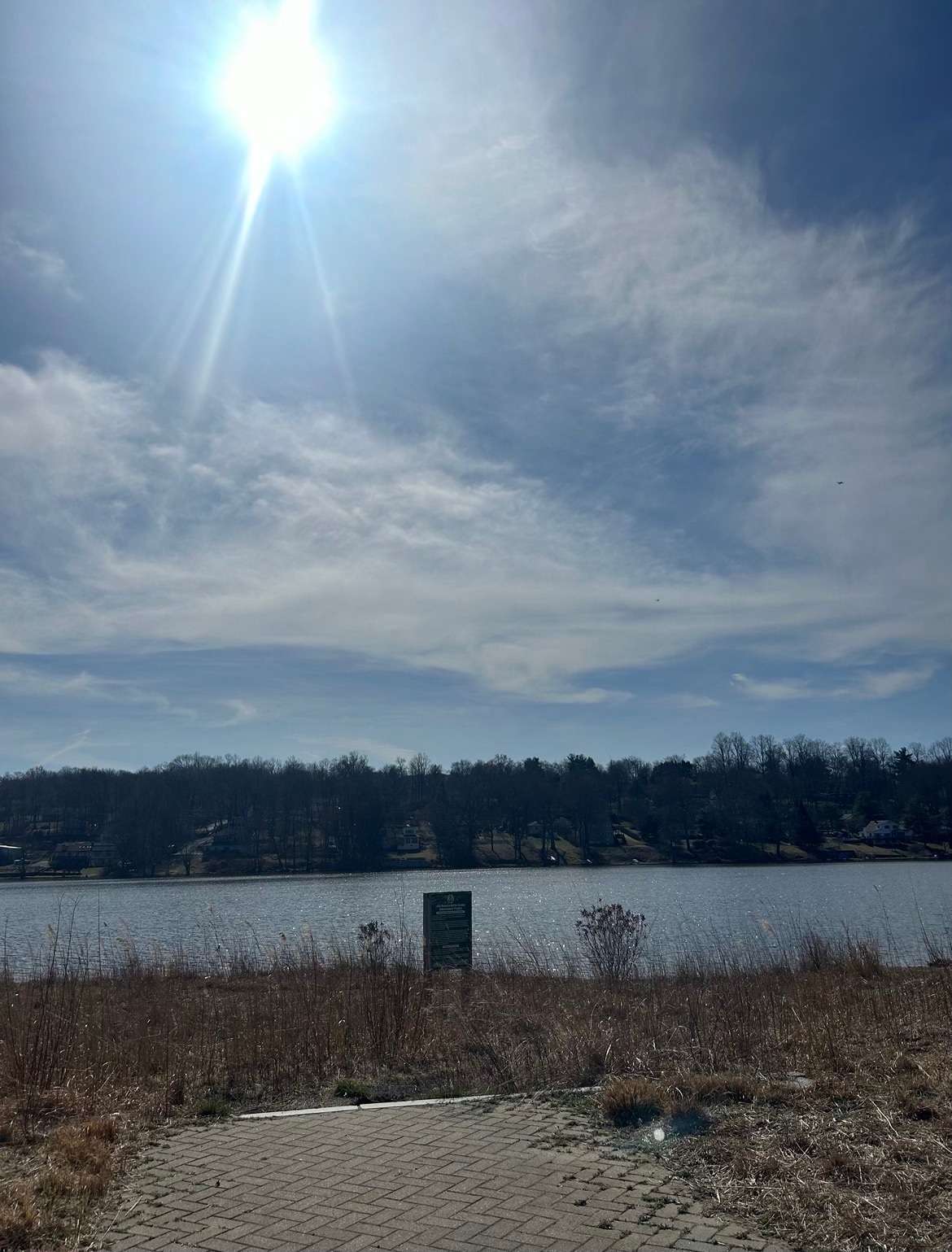
I searched for a spot that I’d never seen before. One that would be fresh and wiped clean of memory. A place I could truly take in and appreciate. This place ended up being Kenosia Park in Rochester. A massive stretch of grass, littered with picnic tables, and spotted with people on brightly colored blankets staring into the sky.

I found my own spot among the people. A small park bench secluded by two massive trees that faced straight towards the water. The sound of others was low here, and I found myself listening for the hustle and bustle I’m so accustomed to. Instead of the typical babies crying, and people laughing I was greeted by a low humming sound. This humming came from the very top of one of my neighboring trees, the subtle movements of tiny insects blitzing their way around the very top of the trunks.

These insects were grouped together, forming a small circle at the top of the tree, looking down upon me as I gazed up towards them. I couldn’t remember the last time I truly noticed these tiny creatures, small pieces of a massive world in which they can simply shoot from place to place, barely being noticed. Quiet observers of a world occupied by bigger and more extravagent creatures. I wondered how it would feel to be an unnoticed visitor amongst an everchanging scenery.

The insects zipped down towards the water, the sun gleaming into the wide expanse of blue that laid in front of me. I looked past the lake, noticing the houses that were speckled across the land across from me. Houses that grew up long after the lake did. Families that came and went. Kids that learned to swim. The lake was a piece of these people. A constant in a world of chaos.

I realized in this moment the rarity that exists within every piece of nature. The backdrop that we constantly surround ourselves in, but never take the time to fully immerse ourselves in.

Just as the trees in my backyard signify each of my graduating years, they signify someone elses broken arm, or the spot where they had their first kiss. Memory is intrisincally connected to nature for humans. The everchanging scenery of the next event or milestone, but also a whole unspoken world left to be painted as the backdrop.

Griffin goes outside for Once: A Blog Post

I will start this blog post off by saying that I sort of did this assignment twice. I did go to the arboretum with my fellow gramaicsy members on great day, but I also was lucky enough to go down to Florida a few weeks ago with my girlfriend, so I will talk a bit about both of those experiences. Also, here’s an image, maybe. It looks like an image in my preview, but not when I publish. I dunno man, I’ll figure it out later.

437089161_1367033303925756_2811488266339053810_n

The Arboretum

As a commuter I spend a lot less time on campus than most students. The Arboretum took me a bit to find, and by the time I got there I was already 30 minutes later than when my group had planned to meet initially. Thankfully, I was still the first one there. Waiting in the gazebo was the perfect oppurtunity for me to stew in the thick fog of that day. Most folks probably wouldn’t have liked the weather, it was cold, gray, the kind where it’s hard to tell if you’re feeling the beginnings of rain or just the crisp air, but those are the days I feel most welcomed by nature. As much as I appreciate the sun and all the life it brings, the light and heat bring a lot of discomfort for me. But the gray days, where the sky is like a pillow and I can bundle up exactly to my liking, those are the days I treasure.

What I heard most of all as I sat in the Gazebo was the rustling of the barren trees in the wind, dead leaves skating across eachother, with the odd low creak, probably coming from the Gazebo itself. It may just be because I rewatched them recently, but it reminded me of the Entmoot from The Two Towers. I was eavesdropping on a conversation between the Gazebo and the woods surrounding it. It reminded me of what I’d imagine it must sound like to be in a large ship, where your seemingly static surroundings are constantly shifting ever so slightly around you.

After maybe 10 minutes of waiting, everybody else showed up. The others were understandably cold and uncomfortable, my dreary days aren’t for everyone. We exchanged some anecdotes, poked around the garden, showed eachother pictures of our families. It was nice to engage in some small way with the campus life I am otherwise quite removed from. I don’t often feel the sense of community I hear folks talk about, but that day I felt like I was part of one, maybe even two of them, just for a moment.

Orlando

My days were quite busy in Orlando, I didn’t get much time to sit in nature and relax. That being said, I still saw plenty. Lizards running around everywhere took some getting used to. The heat was brutal, even on the cooler days. What really got me though, was the birds. I know, it’s such a small thing, and I doubt I’ll be able to really express why they stood out to me the way they did, but I’ll try.

The uncanny valley is a term that I’m most familier with being used in the world of visual effects. If you don’t know, the uncanny valley is a figurative place where things that seem almost normal, but not quite. You may not be able to put your finger on exactly what is different, but you know there is something. For example, think about those weird AI feuled robots with silicon faces, or that makeup trend on tiktok (I don’t use tiktok, please don’t shame me if this trend is no longer a thing).

For my first few days in Florida, the birds all gave me this feeling. Honestly, I thought at first I might’ve been getting the dose wrong on my medication. Whenever I caught them flying, something seemed off. When I could hear them in the parks, they sounded almost like recordings, not quite real.

By the last full day of my trip, I realized what had changed. I was walking through a park with my girlfriend, one she’d walked with her mom as a kid. There we caught a glimpse of a bird, one I hadn’t seen before. It was the most red bird I’d ever seen in my life, I didn’t know birds could get that red. Then it hit me, something that was quite obvious but I just hadn’t considered; Florida has different birds than New York. They’re still birds, they do bird things, they’re not completely alien or anything, but they were just different enough for me, who’s left New York for a total of maybe just over a week since I was 3, to notice.

I’m not sure I can say for certain what all of these differences were, especially since I only registered how these birds were different the afternoon before we left, but it was, sort of embarassingly, one of the coolest parts of the whole trip for me.

Title: My Trip to Roemer Arboretum

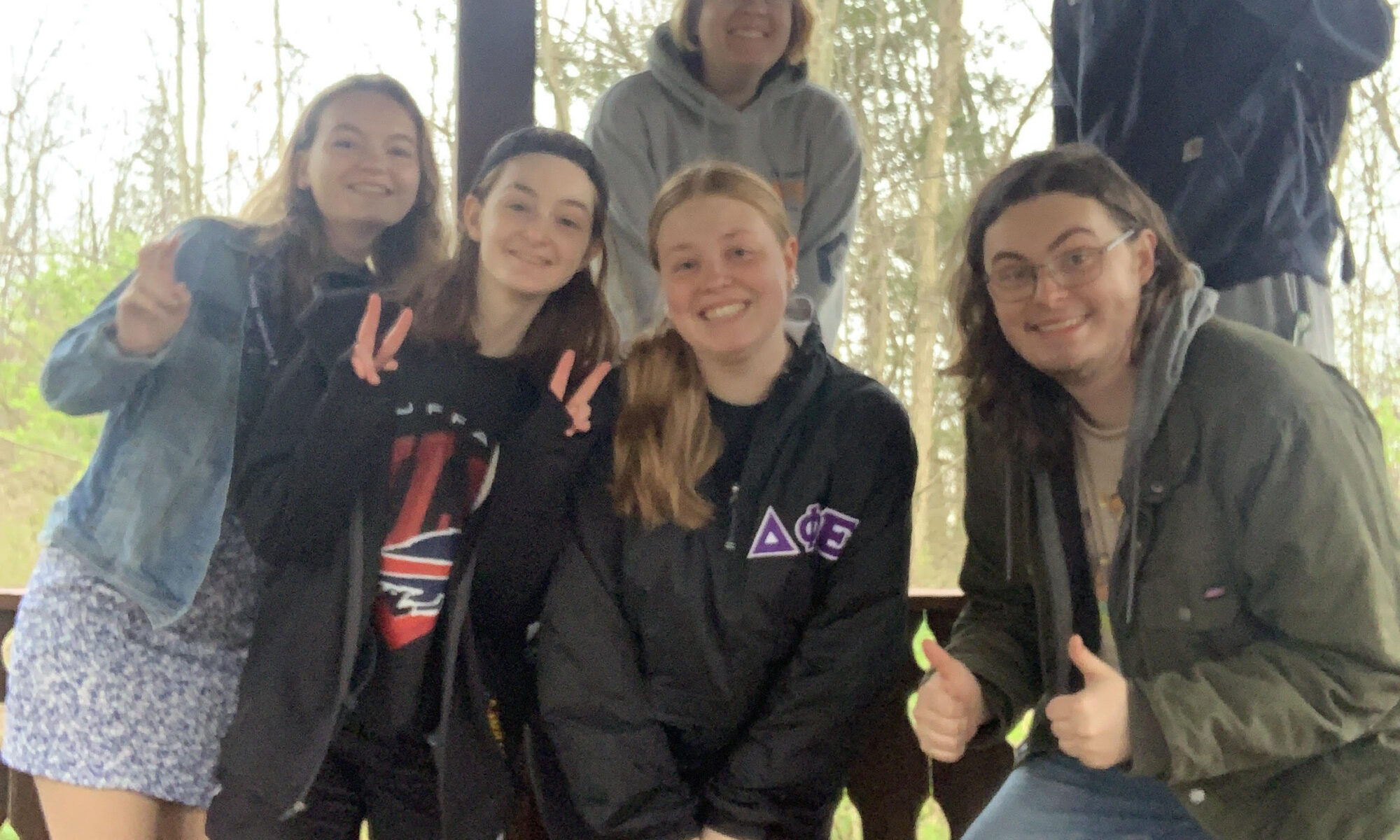
I recently visited the Spencer J. Roemer Arboretum, and it was awesome! It’s this cool place in SUNY Geneseo where you can hang out in nature and see some neat stuff. The Arboretum has a big forest that used to be a pasture. Now, it’s full of trees and plants, and there’s a trail you can walk on. There are also gardens with lots of different flowers and shrubs. When my group and I arrived, it all started pretty normal. We all met in the parking lot right outside the trail and walked in together. We picked Wednesday because it was GREAT day and there was no class. I saw some old oak trees that are big and must be super old as I walked through the trail. Also, at the entrance, there are gardens with tons of different plants. Midway through the trail, there was a memorial for 9/11. I also noticed a big sign that showed what could be found down the trail such as plants for example. The sign showed a picture of a plant, with the name of the plant, as well as a little description of the plant. The gazebo was a nice spot to sit and think at the end of the trail. My group and I chose to stay near the gazebo because of the weather. It was a little windy and it was drizzling. The grass was wet and muddy, I was not a fan of that, but I had to deal with it. I was silly and brought white shoes to go on this adventure, a huge mistake. Griffin went on his own journey, and the rest of us enjoyed the natural greenery around us. They were not flowers or anything pretty like that, but it was plants that were green and beautiful in the way they looked, kind of hard to explain. We took a nice photo in the gazebo, one for the memory books. We didn’t stay too long as we ended our trip and began to walk out together. This trip helped us bond more and many stories were told about this place that I found interesting and entertaining. At this site, you can park for free in Lot J after 4 p.m. and on weekends during the school year. The arboretum is open from sunrise to sunset. The Arboretum is a nice place to relax and enjoy nature. I liked seeing all the plants and trees and learning a bit about the history of the area. It’s moments like these that remind us of the importance of connecting with nature and with each other. I would be happy to do something like this again with my group. Until our next adventure! (The image uploaded very weird, I had a lot of problems trying to figure it out, I am cut off, I am at the top right)

An Afternoon in the ‘Real’ World…

Screenshot
Screenshot

Today wasn’t what I initially expected. I impulsively went to the airplane museum and to lay in the fields. I drove down the rocky dirt road that stretched out to the ongoing horizon. The trees, finally now in bloom, curled overtop, encomasping my car in a natural tunnel. I parked by the war planes from prior generations and set up camp underneath the biggest wing. I first laid on my blanket and ate Taco bell, (which is not the most natural of meals) but I digress. If I had to guess, the field stretches just shy of a mile long, which is pretty far when its a flat, unobstructed view. The sun was just about to set in the west, resting above the treetops. Its finally spring, and I can feel the world coming to life again. After a ‘nourishing’ meal I knew I was ready to tap into my inner Thoreau. I walked out a few yards, far enough to feel surrounded by open space. I laid on my back, and hushed the voice in my head freaking out about the grass in my hair and ants crawling up my ankle. I closed my eyes and clenched tufts of grass in my calloused hands. I took deep, intentional, breaths, until they slowed down just enough to be in sync with the rythym of the deafaning cicadas. It was in this very moment, when I let my mind, my skepticism and fear, quiet just enough to hear the beauty of the world around me, that sent icy shivers rushed down my spine- this is when I truly felt alive. I stayed in the moment for as long as I could, until the incessantly impatient tap of the ‘real world’ pulled me out of this nirvana state of mind. I am very thankful to have done this assignment, not only because it was fun, but because it made me engage with the world around me. At the end of the day, college should be about preparing us for the ‘real world’, and it doesn’t get more real than this!

Sunny Days Make Problems Disappear?

Hello!

First of all, I cannot seem to figure out how to get my image in here, as it says it is too big – I have tried reducing the size of it (similar to how we did so in class) and cannot seem to figure it out! That’s why I have a link attached to this post – let me know if it takes you to the image as it is supposed to!

Anyway, something which I have been talking about with my friends a lot is the way in which we all feel so much better at this time of year (particularly Daylight Saving Time, which was March 10 this year. Of course, there have been several studies on seasonal depression and other related mental illness which can be triggered and attributed to short and cold days. However, it always seems like such a surprise when the time of year rolls around and we all start to feel so much better, even if we don’t feel as though we were in a necessarily bad place in the winter time.

I think a lot of the reasoning behind this is that the sad, slow, cold, dark, monotonous winter (can you guess my least favorite season of the year?) slowly gets people to settle into a different lifestyle: one which exists mostly indoors, with nighttime routines taking place much sooner, and much less time spent with nature in general. I think this all happens so routinely and gradually that a lot of the time, we don’t even notice that it’s happening. I believe that this is telling not only of seasonal shifts in mood but with a lot of mental health ebbs and flows. It is hard to notice the sort of place I am in until I realize how much better I feel once I begin spending some more time outdoors and enjoying longer days.

Another thing which I have always associated with happier times and good weather is the migration of birds back into our area. Going outside and hearing birds chirping and feeling the sun on our faces is such a wonderful feeling every year, and usually leads me to realizing that my baseline mood for the winter is not the same as it is in the summer.

On popular social media apps such as TikTok and Instagram, there are trending “sounds,” or audios which people use on their videos of birds chirping. The videos under these sounds typically deal with nostalgic aspects of childhood, getting the viewer to reminisce about playing outdoors as a child. There seems to be a general link between birds and happiness, often accompanied with nostalgic undertones.

I find this very interesting, as I find myself reminiscing each year as the days get longer. In fact, one of the most surefire ways I know that summer is approaching is when I go outside for the first time, breathe in a breath of fresh air, and think to myself that I feel eight years old again.

Overall, I feel as though a lot of people can probably relate to this, though we don’t usually talk about it as much (potentially because we don’t realize how much these things affect us). The picture I have attached below is of three birds which I saw perched in a tree when I was on a walk the other day. They reminded me of the summers of my youth and how good it feels to be outside.

Thanks for reading and let me know if you can see my picture with the link!

https://mail.google.com/mail/u/0?ui=2&ik=394174af4b&attid=0.1&permmsgid=msg-a:r4984978039260014532&th=18f1d19167485519&view=fimg&fur=ip&sz=s0-l75-ft&attbid=ANGjdJ-Y6GCd-GBJh0oCGLgwzPeP8SfHRxH2CDRkjgQhPs7F210wm_C69_OYfpX8kyQz6s4MX0K84HjPWctZOmVbHhJMhS-BkOGlMQTe5Rfj0SDMG0bmObeeDeFMEhs&disp=emb&realattid=18f1d19033456301e8a1

Peace at Home

I woke up to the familiar sound of a squirrel chirping about in the neighbors tree. At first, I was frustrated. After all, it was 7 A.M., and all I wanted was five more minutes of sleep. I made myself an iced chai latte and decided to talk in the morning sun. One of my many safe places as an off campus student is my beautiful backyard. It can be hard to find a nice, quiet place to observe my surroundings and start the day. I walked towards the bench where me and my friends have hosted some of our best smore sessions. I have created so many memories and prepared to carry more as I looked up at the sky. The sun, the clouds even, looked so astonishing in the early morning. After another long and harsh winter, I began to ponder to myself: when was the last time I came outside and just looked at the sky?

As a kid, I loved to sit on the grass with my mom and watch the clouds pass us by. Together, we would point out the different shapes of the clouds, create short stories with them and make personal connections. I realized how much I missed this, and how much I missed sharing this with somebody. As I sat on the bench, I watched as the birds fluttered towards each other, their chirps as distinguishable as the squirrel who woke me from my slumber. I never realized the diverse amount of birds within my area. I occasionally see the most beautiful Northern Cardinal bird, who resides in a small tree right by my driveway. Although it is small, it is quite loud, making sure that its presence is known. Yet, it is always hiding in a place where I cannot seem to find it, no matter how hard I try.

Every morning on my way to class, I seem to encounter an American Robin. They are naturally friendly birds and are attracted to areas that are highly populated with people. Different from squirrels, who would rather risk getting hit by a car, the American Robins are undaunted by my presence. If I am in no rush, I like to sit and watch them. Never making alarming noises, they are simply curious animals. I occasionally find one wavering around Bailey on the 1st floor. They love to sit by the window. Sometimes I find myself staring, I wonder if they can sense my presence and curiosity from the classroom. The more I see them, the more confident I am in my day.

I realized I wasn’t getting as much as I would have liked just looking towards my house, so I turned around. There is a large land of grass behind the house, shared by many in the neighborhood. I walked a little further and sat on the grass, ignoring how badly it made me itch. I watched birds chirp amongst each other in a tree as two squirrels raced each other to the top of a tree. Two stray cats wandered into the large, unbothered area. Both taking glances at me, unaware of whether I would try to gather their attention or not. They soon scattered away when a flock of deer came into the scene. They were beautiful and so gracefully silent. I hadn’t even realized they were there until I stopped focusing on the stray cats.

Completely unfazed by the neighborhood clatter of lawnmowers, leaf blowers, and minor maintenance, they were fully enthralled by their environment. Looking at them from afar made me admire their bond. Before I could snap a picture of them, they galloped away.

Before I went inside, I took one last look at the clouds. I pointed out a few in my head, making small comments to myself about their shape, figuring out which ones my mom would have liked the best. I decided I wanted to do this again in the future. I want to experience this nostalgic feeling again, embrace the love and connection with my own family. When I go home, I’ll be sure to do this again!

Looking up

Within the world of technology looking down has become common practice, and almost instinctual for humans to do. We look down at our phone screens and avoid eye contact with others. When we finally look up and out at nature we can finally feel peace and connection that no phone screen could ever give.

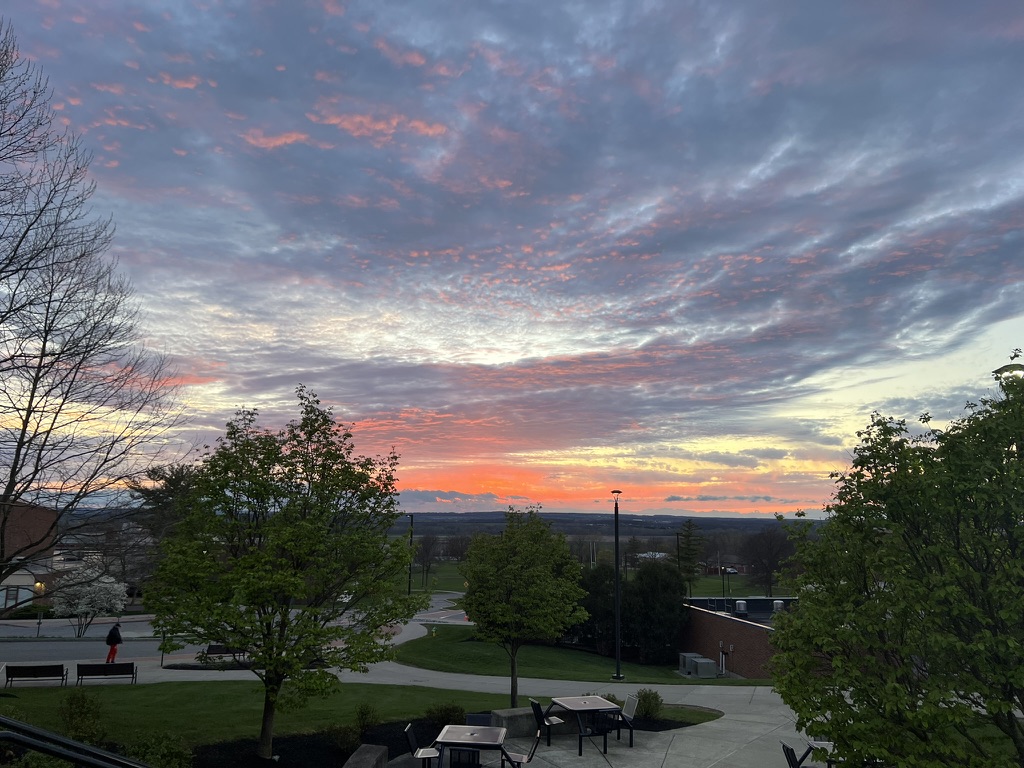
A week ago I was in the union all day studying in a conference room without any windows for 4 hours. I went in at 2 pm when the sun was high in the sky and left when it was beginning to set around 6. When I left the Union I remembered this blog post assignment, and I decided to sit outside and wait for the sun to set. When I was sitting outside I started to reflect on how disconnected from nature I am. With the semester coming to an end and work piling up I am focused so much on my computer that I forget to look up and enjoy what’s around me. When I was sitting and watching the sun go down I put on some music and decided to observe as much as I could. I thought about the grass I was sitting on and how interesting humans use grass. It’s a sign of nature and a sign of class. a nice clean-cut yard looks nice, but if we let grass just grow it’s seen as unkempt. Grass also is a place for everyone to walk on and dance on and enjoy. It’s such a common plant that we don’t think of its existence often. Another observation I made was when the sun began to set. When the sun was going down and the sky became colorful people stopped to appreciate it. When a day comes to an end and we get that small moment of beauty, people do stop to enjoy it.

As I was sitting I began to think about human impact on the environment. We’ve caused such destruction for our planet, and without massive changes, we will cause our extinction. How did we cause this? How did we get to a point where there’s nothing the common person can do to change this? How did we go from living in trees to living in massive buildings and cities? I started to get discouraged. I mean thinking about our destruction can make anyone upset! But I realized something… everything we’ve made and built was for each other. everything we’ve built was for people to live and work together. yes, we live outside of nature and are ignorant of some huge issues, but humans are nature. All of our buildings and roads are just the huge ecosystem of humans. Were destroying our planet, but we’ve done it for mankind and each other. Thinking like this is a part of the problem, but it can be beautiful. It’s amazing what we’ve built together.

As the sun started to set and my time thinking like Walden was coming to an end, I was grateful for everything around me. I’m grateful for my education and the shoes I wear. I’m grateful for everyone around me. I’m grateful that people have come together to build our beautiful campus. I’m grateful that the sun will rise again tomorrow and we’ll get to live another day.