The Creepy Side of Technology?

A few weeks ago when I was casually (or is mindlessly a better word?) browsing through some articles, I came across this one entitled, “This Creepy Digital Rendering of a Human Face Will Follow Your Mouse Pointer Around” Without giving it another thought I knew I had to click on the link.

Basically, if you click on the link in the article, it will direct you to a page where a digital (but very,

Ugh it's like he's looking into my soul...
Ugh it’s like he’s looking into my soul…

very realistic) face fills up your whole screen and just stares back at you. That’s. All. It (HE?!). Does. It will follow your cursor around for hours on end if you want it to. Saying I was disturbed might be a slight understatement. I couldn’t help but wonder why? Why is this a thing? And why can’t I stop looking at it?

This brings up a question I believe has crossed peoples’ minds, but hasn’t actually been explored. How far does the creepy side of technology go?

A slightly less random example is Google Glass. According to one Washington Post article,
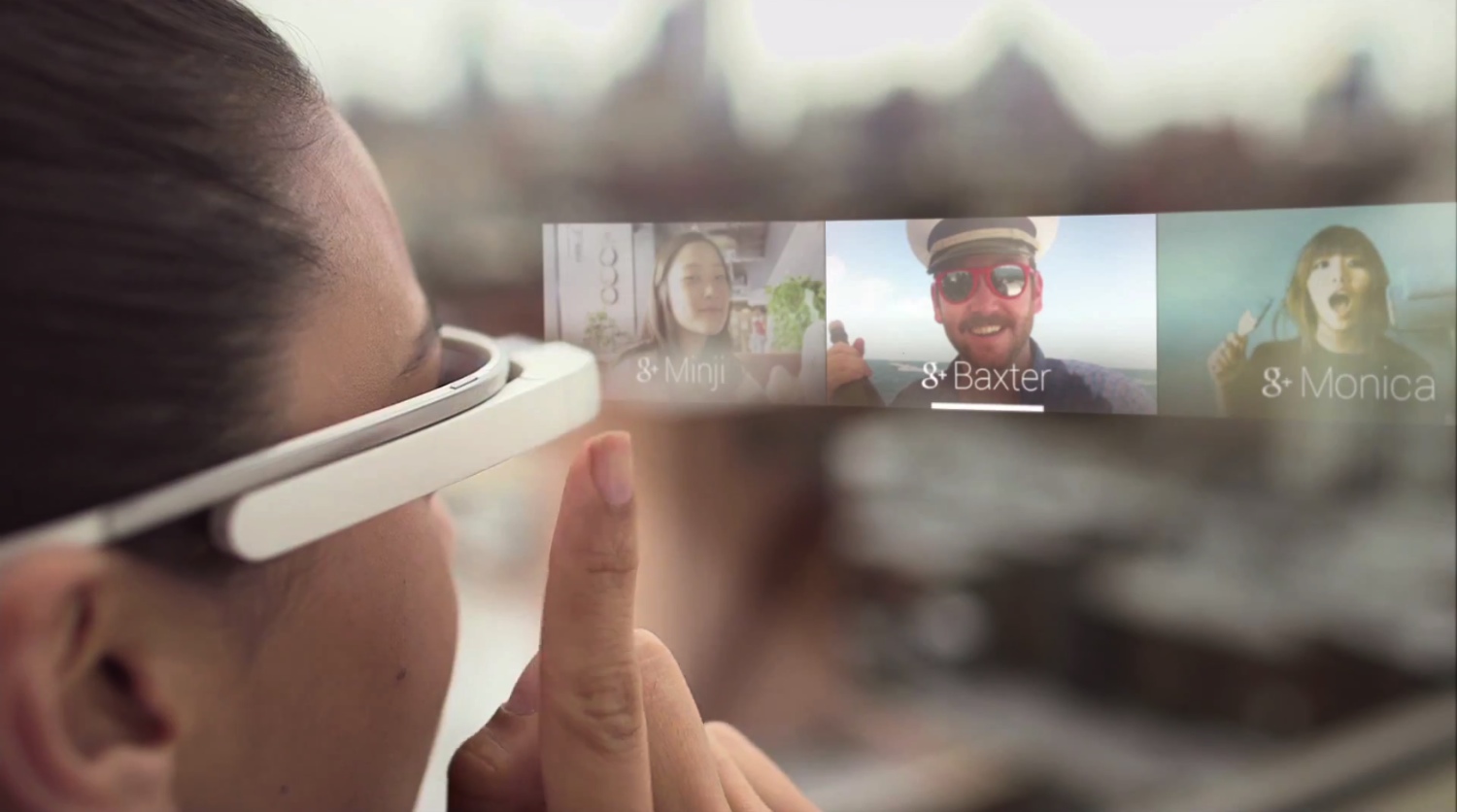
well hello there!
well hello there!

Google Glass is swiftly becoming one of those inventions that might be more creepy than useful. The scenario they offer is how a department store, via Google Glass, can receive an alert that a customer (who scanned a bar-code for that store into their smartphone) is coming in that day. They then can recognize that costumer through their Facebook photo. Fun? Useful? Or plain old creepy?

Another great article I found about some “creepy” technological advances is from Yahoo. It actually offers a great insight about certain drones. They say, “Hackers have developed a drone that can steal information from smartphones.” Should I even continue? Well…if you really want to
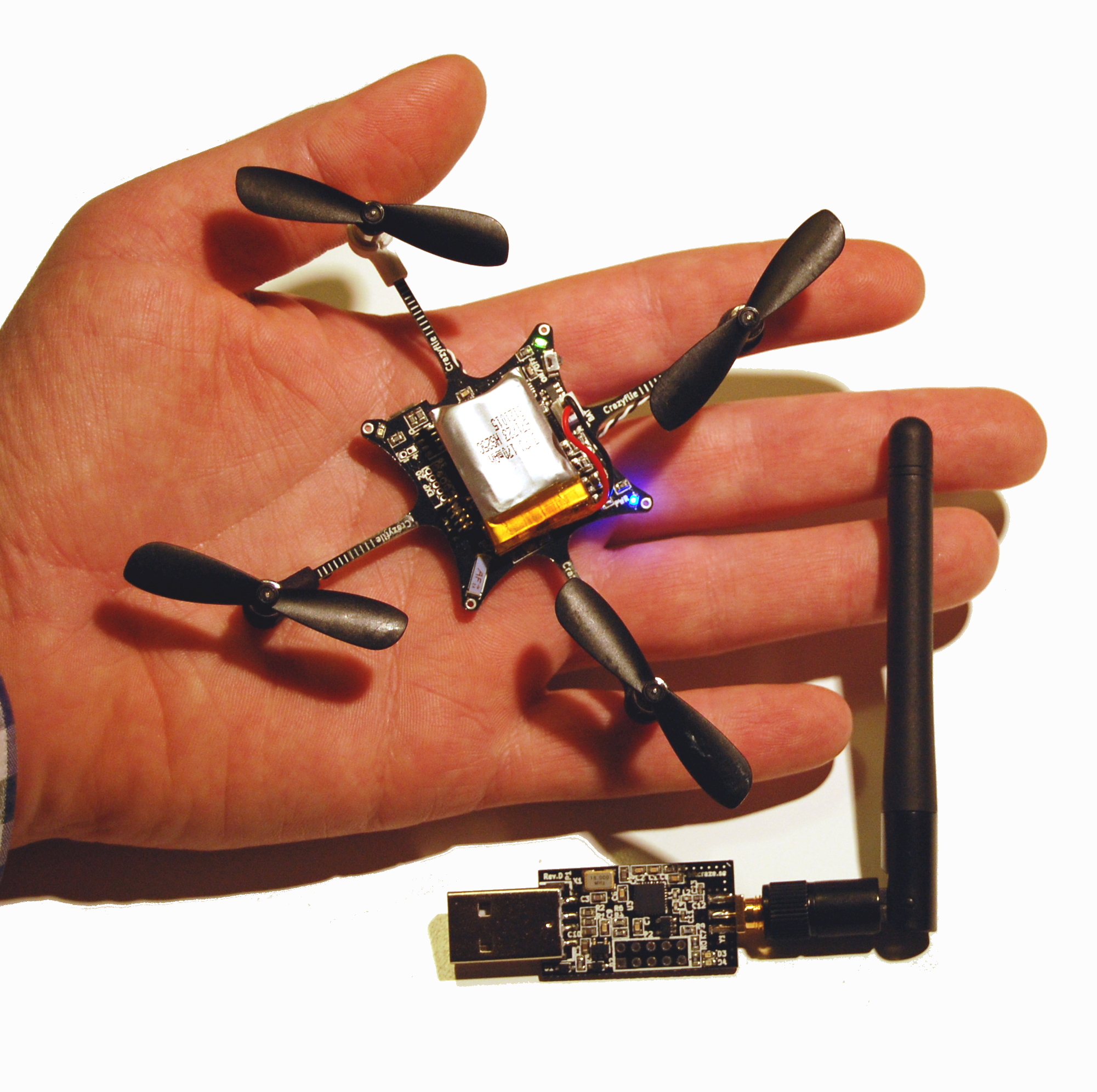
This personally creeps me out a LOT

know…. “The drone’s technology is called Snoopy, which sounds innocuous and is anything but. It looks for mobile devices with WiFi functions turned on, then sends out a signal pretending to be a WiFi network the smartphone is familiar with. Snoopy can then intercept all of the phone’s messages.” I sat stunned for a while after reading that.

And now I am 100% freaked out.

Trust me, I love reading about new gadgets and new “toys” to play with. But is there a line between being cool and creepy? Or, is it because we aren’t used to it yet?

My Grandma liked to tell me that when land-line phones were first becoming popular, her

There's my Grandma everyone!!!! And...my dad I guess... (just kidding he's great)
There’s my Grandma everyone!!!! And…my dad I guess… (just kidding he’s great)

mother (and many others) thought it was ridiculous and crazy. Mimicking her mother’s voice, she would cry, “The invasion of privacy! Can you imagine how annoying and intrusive a phone in your home must be?” Laughing, my Grandma would continue with, “If only ma could see the crazy things they have in 2012!”

But that’s so true. Each and every time something “new” or revolutionary” becomes popular, many people believe it will ruin some part of life. And yet, we always adapt, and figure it out as we go along.

My final thought, however, is will there ever be a day where we fully crossed the line and cannot go back? Do you think a time will come when we cannot adapt, and actually lose some feature of our daily lives?

The New Newspaper

Over the weekend I attended a faculty concert in Doty hall. I arrived a little early so while sitting in the waiting area, I took out a book I was reading for class. A few minutes later an older gentleman walked over to me and basically said, “I’m impressed you’re reading and

What I hope I look like reading in public

not just on an electronic device. People these days will be with each other and be on their phones and not talk out loud”. I looked over at him and tried to explain that it was for a class I was desperately behind in, but he just looked so happy that someone wasn’t glued to their phone I dropped it.

However, it got me thinking. Is it really any different for me to be reading a book and not socializing with anyone, than to have my phone out? Usually with my phone I’m liking someone’s status on Facebook, snapchatting a friend a dumb picture or something really cool I saw, or even just texting. Somehow this idea of being secluded in my own fantasy world is now so novel that I was being applauded for doing something I need to do by myself.

Snapchat really brought these friends together. Now they don’t even have to have a photo forever, just 10 seconds!

This begs to question, is our constant use of our phones really breaking down communication or have we as a society always gravitated towards being anti-social. All I can think about are those pictures of men going into work on trains reading the paper. Why is that a more acceptable than checking up on my twitter feed?

The Fault in Our Copyright Laws

The conversation in class last week about freedom and copyright reminded me of a video that John Green made a year ago about the importance of copyright. For those not familiar with him, John Green is a Young Adult author who also makes YouTube videos with his brother, Hank. In the video, John discusses a poster design that he found on tumblr based on his novel, The Fault In Our Stars.

To summarize: the poster was created by one person, combining a painting created by someone else with a quote from the book. As confusing as that sounds, this is a relatively common situation on the internet. People are constantly collaborating with one another to create all kinds of artwork. Copyright would only inhibit this creative process. Copyright is meant to protect the creator, but what happens when it stifles creativity rather than fostering it?

Copyright is an incredibly important means of protects creative license, but sometimes it can go too far. For instance, an author would have a copyright on their book meaning no one else can use that material without their permission. But this means that fans of the book would not be able to create anything based on the book, as the creative content is under copyright. But these creators are only trying to express their love and enjoyment of the novel; shouldn’t they be able to create artwork inspired by the original work?

The issue of money further complicates copyright. Take the situation with the book from before. Imagine that someone created artwork using a quote or some other integral aspect of the book and then sold that artwork. We can probably guess that author wouldn’t be too happy about someone else making money off of their creativity, especially if the artist claimed it as their own.

I probably haven’t explained this well, but I think copyright law boils down to one simple thing: ownership. What can we legally claim ownership over? Ideas? Writings? Artwork?

And the Copyright Goes to…

After last week’s discussions on copyrighting laws and the rules with which copyrighting is defined, I took a look at an instance that to me seemed a little curious. This isn’t a super insightful instance, but if inspires a dialogue then great, I just thought that this was an interesting scenario.

A lot of college students nowadays are familiar, or at least have heard in passing, about a television cartoon known as Avatar: The Last Airbender. It was a fun cartoon, had a cool concept and had a cast of very relatable and engaging characters. As is common with such shows, it gathered quite a following and a huge fan base exists for the show. A few years later, the blockbuster James Cameron hit Avatar came out, which managed to cash in an absurd amount of money. Now the really unusual thing about this is that one of the reasons Cameron pulled in so much money was by purchasing the copyright on the name Avatar, which essentially barred the name from being used in other productions, including the aforementioned television series. The live action movie that was made from the cartoon series had to be called just The Last Airbender, and the sequel series that the cartoon made had to be called The Legend of Korra to avoid paying royalties to Cameron for an unrelated series.

This to me seems ridiculous.

Why should productions made BEFORE a series have to pay someone else for using their original name? Not to mention that the word “avatar” is a title that has existed long before CGI blue people borrowed it for their description. Robbing former projects of their identities by using bought rights goes against the very point of copyrighting, which is to ensure the artist doesn’t get robbed of their due respect.

I believe that to solve this sort of issue, a change to the function of copyrighting should be made. If a project is published, sent out and reaches a certain profit quota, then the work should have a copyright applied to it immediately. That way, works that have come before other works of the same name can get their due, rather than having the rights be mad bid for ownership. It might be a bit on the unorthodox side, but I know if i created something, I’d want to maintain ownership of its identity, especially if I produced it before a project of the same name. Just a topic for thought.

It’s Written All Over Your Screen

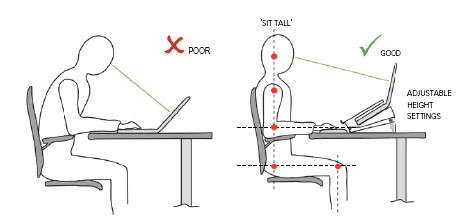
So this isn’t my most thoughtful or deep post, but I’d like to backtrack a moment to possibly the number one concern I hear from people who are wary about digital texts: reading off of a screen. And it really can be uncomfortable! We’ve all experienced tired eyes and headaches after staring at our laptops too long, and the glare from the sun that forces you inside if you need to use your computer. According to one article, “the issue has become so prevalent in today’s work environment that the condition has been officially labelled by the American Optometric Association as ‘Computer Vision Syndrome.'”

I would also argue that there’s a more philosophical relevance to this concern; the screen is the face of the computer. The field of interaction between user and machine is primarily located on the screen (although the tactile experience of typing is of course also relevant, but perhaps less complained about). So, if this interaction is to be comfortable and integrated into every-day life, the screen needs to be user-friendly.

Let’s see what’s being done to improve this experience, focusing on laptop computers (of course ebook tools such as Nook and Kindle have done more on this front, but these aren’t the devices people are using for hours on end).

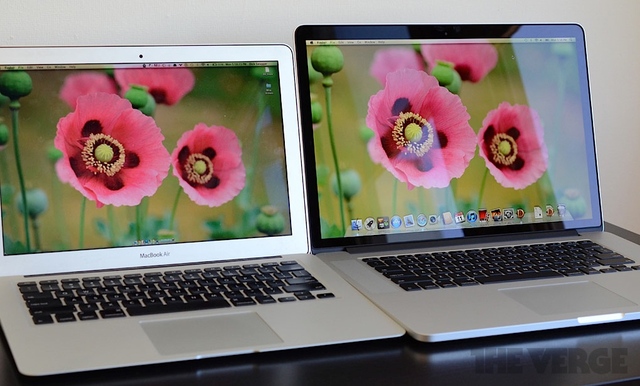
Laptops used to be black and white, prone to blurry screens and ghost images. But, by about 1991 color LCD screens came into use, which improved visual quality as well as cost for consumers. Nowadays of course, laptop screens are at a whole new level, with the emphasis

The MacBook Pro Retina Display...does seem to reduce glare!
The MacBook Pro Retina Display…does seem to reduce glare!

being on resolution and the implementation of touch screens. MacBook has a new “retina display” that’s supposed to have incredibly high resolution (the MacBook Pro 15″ Retina Display is literally advertised as “eye-popping”). However, there seems to be little to no push for these screens to be easy on the eyes. Improvements generally focus on bright color and high definition, but that “brighter and bolder” sort of thinking would intuitively seem to me to make things worse.

In fact, there are articles dotting the web about how to avoid eye-strain yourself. These range from buying computer glasses to sitting up straighter to taking breaks. Clearly this is a common concern. However, the physical screens themselves are not being made more ergonomic and healthy by engineers. I could only find one company that is on a mission to reduce eye fatigue

So my mom WAS right when she said I should sit up straight....
So my mom WAS right when she said I should sit up straight….

through engineering better screens. They are concerned with using direct current to reduce perceived flicker. However, this is not a mainstream laptop producer truly implementing revolutionary technology into their products.

Does anyone else know more about this, or have special tips/screen appliances they use to reduce eye-strain?

The fairness of Computer Based Testing

test

As many of you have probably experienced, there is a push right now for computer based testing. Computer based tests are becoming the norm for taking standardized tests like the GRE and NYSTCE. As with many things there are pros and cons to these exams. But the question is do the pros outweigh the cons? Or do the cons make these tests unfair?

Some of the benefits of computer based testing include: timely feedback, more efficient monitoring and tracking of students’ results, a reduced number of resources (as they are replaced by computers), easier storing of results records, and electronic analyzing of data that can be used in spreadsheets and statistical packages. Some downfalls of computer based testing include: costly and time consuming implementation of the exams, assessors and staff implementing must have IT skills, close monitoring of the software as there are chances it could fail or malfunction during an exam, the absence of an instructor, issues to prevent cheating, and computer anxiety.

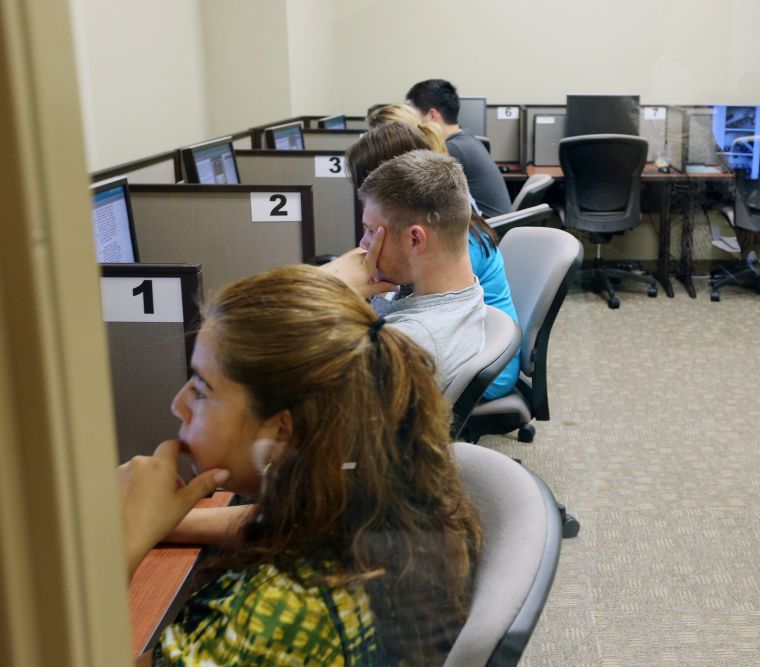
This last disadvantage is a big one for students taking the exams, and it brings up the question of fairness. I am not saying that paper exams are entirely fair, as some people are better test takers than others to begin with. However, the computer based tests may give an advantage to students who are used to using a computer and have better skills using a computer. For example, a student who has not had a lot of experience typing on a keyboard may be at a disadvantage when taking a computer based test. Or a student who struggles when looking at a computer for too long may not be able to complete a long computer based examination.

I am interested to see how far computer based testing will go. Will students soon be taking SAT exams as computer based tests? And will it go so far that using paper and pencils on exams becomes a thing of the past and all tests taken in college and high school are taken through computer software? I do see the advantage of computer based testing, but I think it would be beneficial if students had a choice, especially right now for students who have not necessarily grown up taking all exams and assessments with a keyboard and a computer screen in front of them.

pencil

http://media.johnwiley.com.au/product_data/excerpt/24/04708619/0470861924.pdf


You Can Lead a Horse to Water

I do a lot of commuting: from Churchville to Geneseo, Churchville to Victor, and Churchville to Greece, all on a regular basis. I recently realized that rather than suffering through Eminem & Rhianna’s “Monster” for the 700th time (don’t get me wrong, I liked this song the first 699 times), a better use of my time in the car is to listen to Ted Talks.

Just today, I found two talks that apply to our course in TONS of different ways: Jennifer Golbeck’s “The curly fry conundrum: Why social media ‘likes’ say more than you might think,” and Lawrence Lessig’s (yep, he should sound familiar, and so should some of this video!) “Laws that choke creativity.”

I could write a post about either of these really interesting and relevant-to-340 videos, but I won’t. Instead, I will leave them here for others to “stumble upon,” particularly others who maybe haven’t found anything inspiring to write about in a while. The end of the semester is in sight, and many of my fellow bloggers have only posted once, or worse, not at all; hopefully these videos will help.

Are online skimming habits making us worse serious readers?

keep-calm-and-embrace-technology-2 (2)It seems appropriate, given the previous post about the ways in which technology helps or hinders our communication, to discuss how these new tools have also impacted the way we interpret the information we’re given. It’s nice to think that we as English majors can transition seamlessly between old and new media outlets, appreciating the feeling (and let’s not forget the smell!) of an actual tangible book while still keeping up to date with the new helpful technologies available to us. But the truth is that getting used to reading in the newer and more common formats, such as on a computer screen or smartphone, really can — and does — influence how we read “real books.”

In an article from Sunday’s Washington Post, Michael S. Rosenwald points out that our reading behavior with more serious texts has come to mimic our online, internet-surfing reading habits. One neuroscientist described this reading as “superficial” and said she worries that it is affecting us when we have to read with more in-depth processing. I’ve certainly noticed this in my own reading habits, and find it endlessly frustrating.

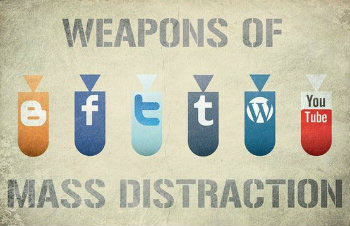
weapons-of-mass-distractionOn the internet, we skim. We look for important words that are of interest to us and if we can’t find them, we click on to the next page. I know I’m not alone in this. In our class discussion today someone from the group working on the Walter Harding website talked about including things like a letter from Albert Einstein to give the audience a reason to be interested and stay focused, since the eye is so easily diverted on the internet. It’s true! If we don’t immediately find something that piques our interest, we move on.

When I have important readings for class that are online, I have to close all other tabs and even use the Readability add-on that Dr. Schacht showed us earlier in the semester just to keep myself from getting distracted. It’s like my brain automatically assumes that if I’m reading on a computer monitor it must not be important, so my eyes start looking for “clickables.” To quote from Rosenwald’s article, “The brain is the innocent bystander in this new world. It just reflects how we live.” Clearly our leisurely habits are sneaking into our serious work as well.

ac4bb8a5ec3201c597967935c7ccfa94-617x411I encourage you to think about how you’ve experienced this just over the course of your time reading this blog post. You probably looked at the pictures, clicked the links to other websites (and maybe even other links on those sites), went to another tab to answer a Facebook message, and countless other things. I did all of that while writing the post too! Most of us are guilty of this habit, and that’s just what it is: a habit. We’re like little squirrels running around on the internet. Our focus is on one page until something more interesting (and not even necessarily better) comes along, at which point we leave our first focus entirely, sometimes struggling to remember how we got there in the first place. On one hand, it’s great that we have so much information readily available to us, and my guess is that there has to be a study out there somewhere regarding benefits of technology on our multitasking abilities! But when we’re so used to being bombarded with all of this, taking the time to slow down and isolate ourselves for a task without so many distractions can be a challenge.

Does Technology Help Us Communicate Better?

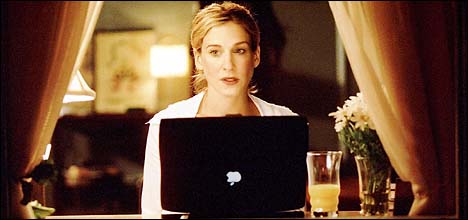
 “Are all these improvements in communication really helping us communicate?”

(Sex and the City, Season 4, Episode 6)

             It was a typical afternoon. I was home for spring break a few weeks ago, when I decided to unceremoniously plop myself down on my couch and flip through the TV channels. As I was lazily deciding which show I should purge on, I happened to stop on Sex and the City right when the main protagonist, Carrie, said that quote above.

Carrie Bradshaw from Sex and the City

Right away (or right after the episode was over…) I knew I had to do a little research. When that quote was said, it was only 2001. That was thirteen years ago. When Carrie said that, she was debating whether or not to get an email address. She thought that was “too advanced” for her to handle.

What about today? Today when we can text one another, Face Time each other, Skype, Facebook chat, Tumblr, and so much more? If someone once thought that email was too “high-tech,” then what about right now? Does technology truly help us communicate any better?

In his book, Stop Talking, Start Communicating, Geoffrey Tumlin says that, “A tech-centered view of communication encourages us to expect too much from our devices and too little from each other.” Yes, with all of our gadgets and gizmos we can communicate easier and faster. That’s an obvious thing. But, is it any better? Super_Solvers_-_Gizmos_&_Gadgets_Coverart

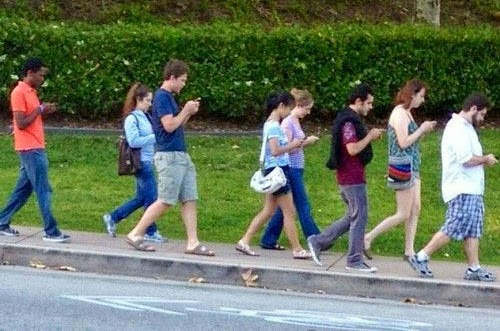
In a great CNN article, “We never talk any more: The problem with text messaging” Jeffrey Kluger states that,The telephone call is a dying institution. The number of text messages sent monthly in the U.S. exploded from 14 billion in 2000 to 188 billion in 2010.” People, wherever one goes, are always looking down at their phones, instead of looking up. They are immersed in all of its aspects (mostly texting), and to see a person actually talking on it is a rare site nowadays.

We can easily read a message, a text, an email, but we don’t understand the emotion behind it. One can sincerely believe that a message sounds mean, while the author never intended that at all. Without always understanding a person’s tone, how then do we know what they actually are saying?

Geneseo anyone? JUST KIDDING/I do it too...
Geneseo anyone? JUST KIDDING/I do it too…

An easy counter argument for that could be reading a book. How is one supposed to know what the author’s tone is without asking him or her? Yet, that is usually a simple thing to figure out. We as English majors do that for everything and anything we read. However, that also could be because a book is longer than a text message, and has phrases such as, “he said with a vengeance” throughout. I personally don’t know many people who narrate their own text messages.

But, one cannot overlook the ways it truly has helped us. In a Huffington Post article,  Joel Gagne says, “(School) Districts benefit from embracing, rather than shying away from, technology. Districts can utilize various different technological platforms to engage their community and seek their input. By ensuring there are provocative topics and the need of feedback from the community it will ensure things are interesting. Readers like to know you are really interested in what their opinion is. Using technology can help bring your school community together.” Technology also can help loved ones see pictures from a trip via Facebook, rather than having to wait months to meet up in person. It can help people living across the globe talk every single day without much cost. It can get ideas spread so rapidly that in a blink of an eye a revolution of sorts is happening. Years ago this was never possible. And yet, today, it is.

Awwww
Awwww

While I myself believe that all of our “improvements” aren’t making us communicate a whole lot better, that doesn’t mean I don’t find it easier. Instead of calling my mom to tell her something, I text her. If I see a new book out that I think my dad would enjoy, I email him, instead of calling him. It is easier, and it is faster, and I use my cellphone and laptop Every. Single. Day.

And, for better or for worse, I don’t plan on stopping.

WWMS: What Would Marx Say about Digital Commons

Perhaps this is just because I’m currently reading The Manifesto in Humanities, but with all this talk about the consequences for private property in the digital age, I was wondering what Marx would have to say about all of this. The answer I arrive at is vague and pretty unhelpful (like Marx himself on the whole), but I’ll get there in a minute.

Before all this talk of communism, John Locke wrote about the implications of property ownership as early as the 17th century. He writes in his Second Treatise of Government (based on my limited Humn knowledge) that property was originally defined by what

John “Locke”: Because he was exercising his natural right to liberty…

you could hunt/gather for yourself without wasting. This created a level of equality among people, because amassing enormous wealth would be physically taxing and people stopped collecting things when their “natural” needs were met. Things like berries and meat spoil quickly, so it would make no sense to horde them. The appearance of money and its triumph over the barter system changed the way people owned things. Now people could own things unequally, and theoretically amass unlimited amounts of wealth that last and accumulate. This sounds like the capitalist system we have today.

 Marx, of course, credits any social development throughout history to economics–essentially, the distribution of property. Engels is really the one who describes the property distribution between the upper-middle bourgeoisie class and the working proletariat. The workers are stuck in an endless cycle of poverty. Marx writes in his Manifesto that the typical system of “synthesis” that happens when “haves” and “have-nots” clash will not be possible when the bourgeoisie and proletariat of capitalism inevitably meet their end. Capitalism will finish, and some sort of revolution that is unimaginable will happen. Communism, or equal distribution of wealth, is the best way to stop putting band-aids on capitalism and urge on this “revolution.”
Blamed Capitalism before it was mainstream....
Blamed Capitalism before it was mainstream….

So, WWMS about the question of digital commons, or places online such as Digital Thoreau in which anyone with internet access can “own” something? How can anyone truly own something/the rights to something if digital sites are open-access?

I think the important thing to remember is that the nature of property distribution has changed as texts, ideas, images, etc. have moved online. Nowadays, an artist can’t be assured for one second that she’ll receive money for everything she has published; someone somewhere will undoubtably have found a way to copy-paste or download or screenshot, etc, etc, etc, her work. There’s a block in the money-centered, capitalistic flow of trade that people such as Scott Turow, Paul Aiken, and James Shapiro would argue discourages creativity and production.

BUT

This is where things get eerie, because Marx predicts the destruction of means of production as ways to combat the over-production of final-stage capitalism. The sheer volume of things produced on the web make it a perfect example of capitalism in its final stages. There’s overproduction and then unwillingness/inability to pay on the part of consumers, and then a disincentive for producers to continue….producing.

Communal spaces on the web of course sound kind of communistic in that they equalize people as consumers. However, they’re different than the material property and situation that Marx and Engels were so sure determine everything in the world. In fact, it seems to me to be more similar to the berries and meat Locke spoke of. Web content doesn’t really have an expiration date, but there’s only so much you can download and read and listen to on a computer or in a day. And the amount that you download on your computer doesn’t determine your wealth or material situation (unlike money). This is arbitrary property that falls not really under the supply/demand chain of communism, but more under the take-what-you-need-but-it-will-take-time-and-effort model of the hunter/gatherer system.

Of course where it differs is that people have to produce online content, whereas deer produce venison for us (thanks, deer). So we still have the problem of production. But, Marx would definitely say that that anxiety is the capitalist in all of us which can’t envision any other way of viewing the world except as a giant factory of creation. However, that still doesn’t help us very much in finding pragmatic ways to encourage production in a communal world without guaranteed payback for your time and effort.

So I think Marx would look at the digital age and the way property has become in nature and in distribution, shake his head, think of the end of capitalism, smile, and say I told you this was coming.