Fighting Fire With Fire: Using Technology to Battle Cyber Bullying

Recently New York State has passed the Dignity for All Students Act with a goal of addressing the growing problem of bullying in high schools. Part of the plan for eliminating bullying involved a six hour training course of all school employees on how to properly avoid and address various bullying situation. I, being a volunteer high school coach, fell under this umbrella and attended the course a couple of weeks ago.

Predictably, part of the seminar focused on cyber bullying. Much of what the instructor was saying during this discussion caught my attention as it sounded awfully familiar to our discussions from class.  She explained that while cyber bullying isn’t something that happens frequently on school grounds, it is far more detrimental to the victim due to the public nature of the humiliation over the internet. I thought of this during our discussion of Professor Schacht’s interview on Digital Thoreau being spreading further than expected across the internet. This same wildfire concept applies to cyber bullying.

I dug further into the issue and found a CNN article that sparked my interest. According to the article, students at MIT were looking to formulate a program that would detect bullying language. It is similar to the programs Kirk Anne discussed in class that would find and count the amount of times a word appeared in an article. The problem with this solution is lack of a way to detect sarcasm. These programs only work by sifting through the words on the page without considering their intent. For example, instead of posting “that’s an ugly haircut” which would be flagged for “ugly,” a teen could instead post “wow, great haircut” and have the same malicious intentions.

Difficulties reading sarcasm over the internet is certainly not a new revelation. The term Poe’s Law was coined to explain that without a clear description of the author’s intentions, it is impossible to determine whether their expressions were “sincere extremism” or “parody extremism.” Of course, no one ever thinks that what they say has any consequence. Unfortunately this isn’t true with the internet being, as we discussed, open to the whole world. The case of Justin Carter, who was arrest for what he perceived to be sarcastic remarks, spent months in jail for what was read by many to be violent threats against his school.
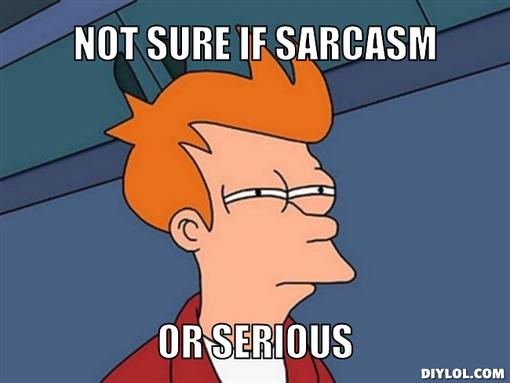
A more basic description of Poe’s Law

This raises the question of the future of internet security. With bullying, harassment, and threats becoming so prevalent across the web, what kinds of restrictions should we expect to see in the future? If what we say is indeed sarcasm, wouldn’t censoring our work be infringing on our first amendment right to freedom of speech? And how, if at all, will this affect us as Digital Humanists?

Experiences in Student Teaching

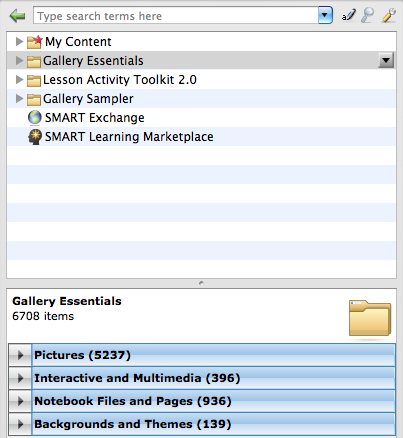
Last semester I when I was student teaching I was encouraged often to look at how technology impacts education. Overall I noticed that technology is a huge factor in education but one specific example is the Smart Board.  Almost every school I have observed in has integrated the use of the Smart Board in as many classrooms as possible. Many teachers use it to present notes and presentations for the class. I have seen it become very beneficial especially for math instruction since it can completely replace the chalkboard in working on math problems. There are also many interactive tools that teachers can incorporate to further instruction.

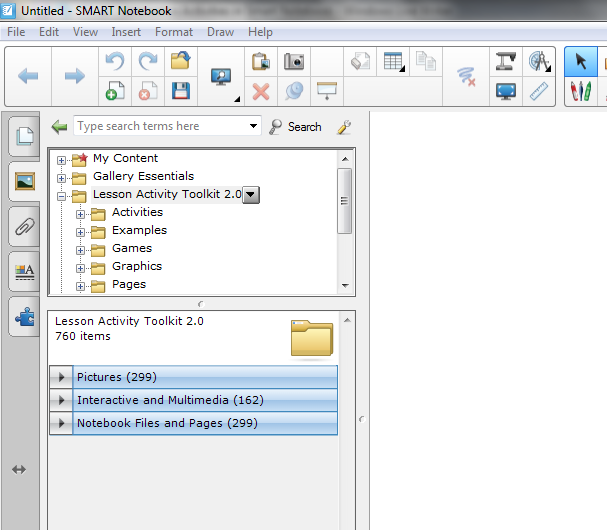
Some math notebook tools. (Among many others).

There are also two sections called Gallery Essentials and Lesson Toolkits which include many interactive multimedia to insert into the presentation. These graphics often make the lessons fun and engaging for students. They include templates for games and that teachers and students can play to quiz themselves on the information. I saw how these games kept the students interested in learning since the media and interactive aspect of it was fun for them. 

image      smart-notebook-gallery-and-lesson-activity-toolkit


The image below is an example of an interactive game for students. The teacher can edit this template so that there is any kind of information presented. In this game the students would have to sort and categorize the given information (angles in this example) into the two categories. They would simply drag the image into either category over the swirl, and if the answer was appropriately sorted it would be sucked into the vortex. If the answer is incorrect it makes a noise and bounces the image back out. This game specifically was really beneficial to the students in my classroom who were learning the different words that mean either to add or subtract. They really enjoyed the game and were able to quiz themselves on what they knew.

One example of a math interactive game.


Authors on Twitter

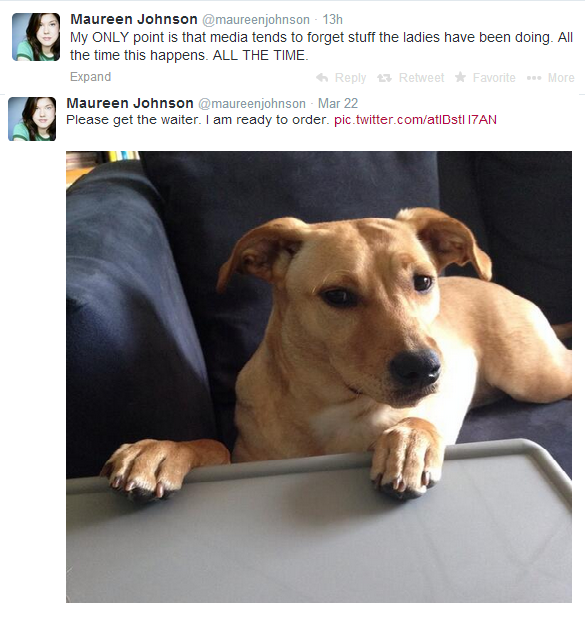
We recently talked in class about how the internet can be a democratizing force rather than an alienating one. To me, social media affords us this opportunity to consider one another as equals. Twitter is an especially great example as you can follow your friends as well as your favorite celebrities with both then appearing on the same feed. Twitter is also home to many authors, to name a few: Maureen Johnson, John Green, Lois Lowry, and Meg Cabot. Twitter humanizes these authors in a way that we have not seen before. For example, Maureen Johnson (@maureenjohnson), a YA novelist, juxtaposes tweets about her dog with tweets about the how the media tends to forget about women writers.

Maureen Johnson

Recently, both John Green (@realjohngreen) and Lois Lowry (@LoisLowryWriter) have been tweeting about their books being adapted into movies. They have both been incredibly enthusiastic about the adaptations, while addressing readers’ questions and concerns regarding the adaptations.

John Green

Lois Lowry

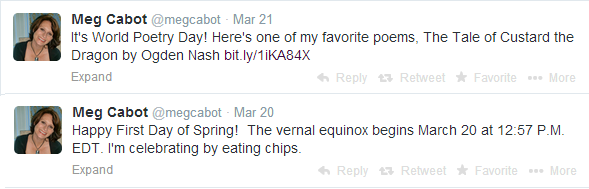
Meg Cabot (@megcabot) displays a balance between tweeting about their writing and other literature with personal tweets.

Meg Cabot

What sets these authors apart from others is that they have actual conversations with their audience. They take the time to answer questions and truly listen to their readers. Twitter gives us an opportunity to be immersed in the writing process. As authors tweet, they invite us along as they write, edit, and then publish their works. In today’s digital age this opportunity to actually interact with writers and authors comes as a welcome change. Literature is a conversation between the author and reader, a conversation which is then continued through interactions on Twitter.

To Meme or Not to Meme…

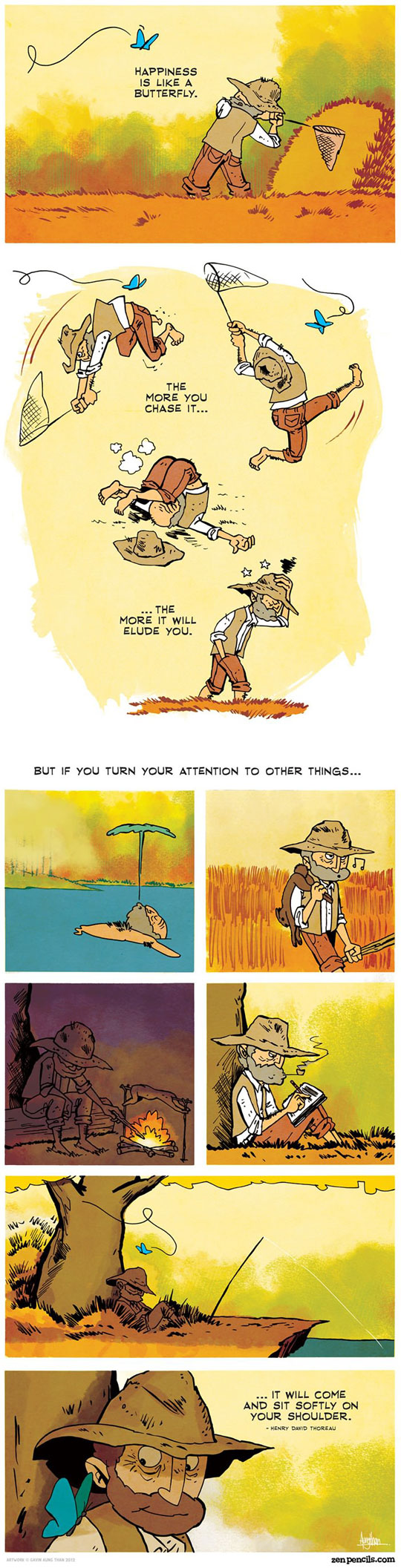
The other day I was browsing through a couple of different websites when I stumbled upon this meme.

So cute!
Click on the picture to see it fully! Once you’ve opened it in a new tab/window click on it again to see it better :)

First off, the quote fits perfectly with our class. Anything involving Thoreau is almost always relevant to what we are talking about everyday. However, there is a whole other reason why this quote, and to be more precise this meme, stood out to me.

For a while I’ve heard various people say that “our” or “my” generation doesn’t have the focus or determination to read a book cover to cover. I’ve heard many people shake their heads in annoyance and mutter how all of the classics are going to waste, since the “kids these days” don’t have the patience to read “good” literature. So many people talk as if the era of the novel is coming to a swift end.

And, in a way, I can see where they are coming from. According to www.theamericanscholar.org, from 1970-2003 the number of men and women studying English literature in the United States of America has dropped from 7.6% to 3.9%, and that number continues to dwindle. The humanities in general are seeing its figures go down compared to the sciences and business.

However, the optimistic side of me has hope. Even though a number of people aren’t deciding to study literature (their loss!), that doesn’t necessarily mean that younger people aren’t being exposed to classic works or writers.

This is where “memes” come in. An Internet meme is, “is an idea, style or action which spreads, often as mimicry, from person to person via the Internet, as with imitating the concept.” We’ve all seen them one way or another.

love him
love him
but not really her...
but not really her…

Net Gain?

Does the Internet bend towards a certain kind of politics? Democracy? Anarchy? Totalitarianism? Something else?

Is its basic tendency to promote the freedom and autonomy of its users? Rob them of their privacy? Cultivate a stance of critical detachment? Distract them into complacency?

Does it have no particular bent? Is it just a tool, capable of promoting whatever purpose the user puts it to?

The authors in our next set of readings engage questions of this kind. Although they all acknowledge various abuses to which the Internet is susceptible, they’re broadly optimistic about its overall impact. In the final chapter of Small Pieces Loosely Joined (not, unfortunately, one of the chapters you can read for free on the book’s website), David Weinberger suggests that “The Web’s movement is towards human authenticity” – and, consequently, away from “alienation.” In “The Wealth of Networks,” Yochai Benkler argues that the Internet’s networked structure (the same feature referenced in Weinberger’s title) tilts towards more autonomy in our relationship to culture, more power to find and assess information, more opportunity to engage in democratic deliberation, and more space for non-market and non-proprietary production (simply put, stuff made for love rather than money). The title of Clay Shirky’s book – “Here Comes Everybody: The Power of Organizing Without Organizations” – references not the structure of the Internet but its human corollary: the loosely joined individuals and groups whom the Internet enables to circumvent centralized political and economic organizations in the pursuit of shared goals. Again, the vision offered is one of greater freedom and autonomy.

The Sunday before last, in its SundayReview section, the New York Times published a piece by Jeremy Rifkin titled “The Rise of Anti-Capitalism”. Like Benkler, Rifkin sees profound, and profoundly liberating, consequences in a central economic fact about digital production: that the marginal cost of that production is near zero.

You’ll find a much darker view of the Internet, however, in the talk that Maciej Ceglowski delivered last month at Webstock 2014 in Wellington, New Zealand. Titled “Our Comrade The Electron”, Ceglowski’s talk doesn’t dispute what the writers above argue about the bent of the Internet’s architecture, but it asks us to consider the possibility that maintaining that architecture may just be too hard. And it asks us to contemplate the consequences if that possibility turns out to be correct.

Ceglowski’s piece isn’t on the syllabus, but you’d be a fool not to read it. It’s thoughtful and lively, and the argument is embedded in some fascinating history.

When you’ve finished it — but only then — soothe yourself by listening to Pamela Kurstin play “Autumn Leaves” on the theremin.

Cold, Unsympathetic Technology

If you’re anything like me, since the moment you got word of the missing Malaysian airplane, you’ve been checking for updates every spare second you get. There were times when watching the news felt more like viewing an early episode of Lost; jets that big don’t just disappear. At least part of the mystery came to an end today when the Malaysian Prime Minister announced that authorities are “assuming beyond a reasonable doubt” that the plane went down somewhere in the Southern Indian Ocean. Upon reading this I wondered about the families of those who were on the plane, much like I have since first learning of the incident. Are they relieved to have this answer, even if it wasn’t the one they’d hoped for? In this case, is bad news really better than no news?

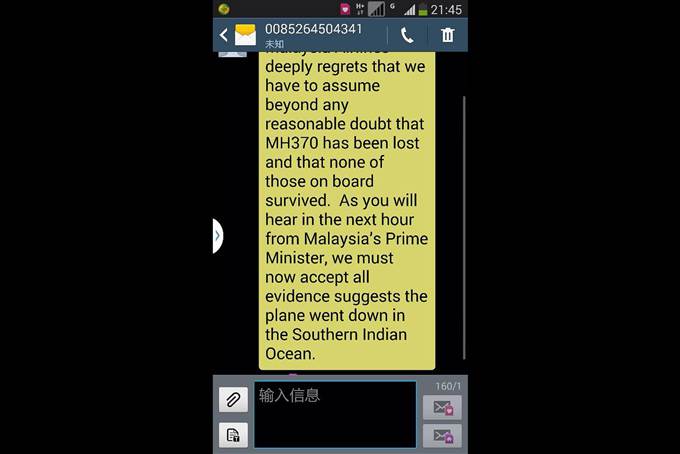
As I browsed articles for information, this one in particular, it didn’t take long before I read something with immediate shock value. It’s right there in the first sentence: “The families of passengers aboard the missing Malaysia Airlines jet have been sent text messages telling them that the plane has been ‘lost.'”

Text message sent to the families of those on Malasia Airlines flight 370
Text message sent to the families of those on Malaysia Airlines flight 370

Text messages?! Seriously?! These people have been in agony for weeks wondering about the fate of their loved ones, and Malaysia Airlines decides to confirm their worst fears via text message? What kind of callous person could have possibly decided that this was a good idea? Yes, informing the families of 239 passengers is a daunting task, but when it’s a disaster of this magnitude, you’d think they would take the time to do it tactfully. According to one article, most of the family members were still located in Kuala Lumpur waiting for information, and yet they received this text message only minutes before the rest of the world got the news. I couldn’t help but think of some of our discussions in class about how technology has the potential to dehumanize us.

When a loved one dies, the news is typically delivered by word of mouth, whether from a doctor, medical professional, or a closer family member. The person delivering the news is able to offer their sympathy and support and can tailor it to the person they’re telling to make it appropriate and easier if possible. Grief is one of the most basic human emotions and we rt_malaysia_family_kb_140324_16x9_608rely on sympathetic, responsive human contact to get us through. Witnesses said they heard screaming and and crying coming from rooms where the families were gathered. At least one person is reported to have fainted upon hearing the news. Communicating information through SMS message, while convenient, is not appropriate for a sensitive situation like this. I understand that the business of Malaysia Airlines is transportation, not grief counseling, and that they are likely much more concerned with bigger media matters, but as human beings they should’ve known better. It is clear from these families’ shock that they still held hope that the passengers would be found alive. Delivering what is possibly the worst news of a person’s life via text message goes against the rules of social courtesy and in my opinion shows a real lack of consideration for others’ feelings. In times like this people need to be united by the all too common experience of losing a loved one. A mass text message is a cold replacement for the warm, sympathetic hug each family member would ideally receive.

“Today, life has become long distance and automated, and it’s not going to work.”

As a bit of an afterthought, while I was still mulling over what I wanted to write, I came across this post on the “Portraits of Boston” Facebook page (for those who don’t know, it’s a photo blog much like Humans of New York). Hearing (or reading, rather) what this man had to say about how disconnected we are as humans solidified for me the problem with the text that was sent to the families of the Malaysia Airlines victims. It furthers our culture of disconnection from one another. We hear about how much technology has brought us together, but the connections it fosters are usually fairly shallow. As the man in the picture said, “people are yearning for deep human connection. When we have it, we identify with the person or people. We better connect to each other or we will become more and more dehumanized.”

Digital Revolution Boosting Literacy

For this post I wanted to focus on a more personal viewpoint on connecting reading with technology.  I grew up relishing the concept of a book. From the feel of the pages, to the smell of a freshly printed novel.  I savored every chance I got to flip the page.  Each turn of the page was an accomplishment in my eyes. I was making my way, that much closer to the ending of the novel.  I had linked the idea of books always having a binding.  There was no other way.

It was not until landing a job at my public library did I start to embrace the relationship between books and technology.  I was quickly introduced to the most popular section of our library.  The audio book layer. Watching the differing ages of patrons that checked out audio books sparked my curiosity.  We even had books on tape for young children to help with the introduction to literacy. People were getting excited more frequently about reading because of this intermixed connection with technology.

My judgment kept me from realizing what advantages technology introduced to young children.  Though it is pleasurable to hold onto a hard copy of a book and mark it with the questions and ideas that arise, technology has introduced convenience to adults on the go and has increased the starting age of having children comprehending and reciting words on a page.

I wanted to discuss any indifference’s people might have had while first embracing the concept of using technology to read books. I still lack the companion of a Kindle or Nook and do not see one in my near future, but this class has defiantly warmed and opened my mind to different viewpoints on the advantages we have been blessed with by the new technology that swarms us.

This is a revolutionary concept as “technology has reinvigorated an art form instead of crushing it”.

Technology is sparking peoples interest in books and getting more people to start reading and developing excitement in what they are engaging themselves in. We are starting to uncover the fact that more people are starting to relish in listening comprehension in addition to visual. What are your thoughts on Audio books, Kindles or ibooks? Were you accepting in the combination of technology and text? Did it spark a new found admiration in reading? Did it hinder a previous admiration?

Off the Grid….(for a day)

I just got very excited about a  New Yorker  blog post I stumbled across. The writer, Casey N. Cep, is specifically addressing the “ National Day of Unplugging ,” in which participants spent a day without technology, and posted photos of themselves holding signs about what they did with that free time. She dismisses the idea that this movement is truly meaningful, and cited different ways in which technology enhances our lives, and why attempts to “escape” it are ultimately unsustainable.

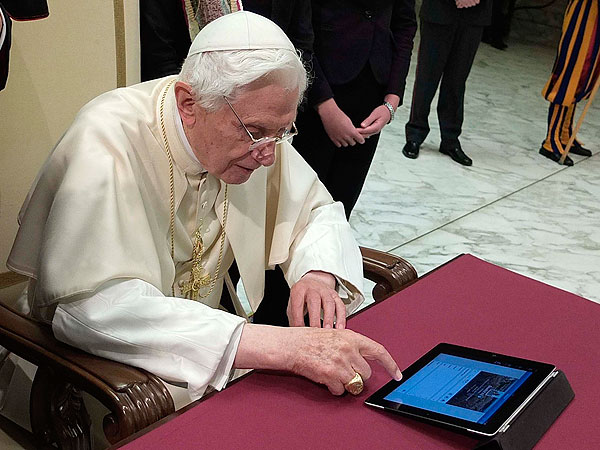
@Pontifex #coolestpopeever

Citing statistics regarding relationships forged online or the Pope’s perspective on the validity of online identities, Cep argues that the concept of a “real” world versus a “virtual” one is an inaccurate binary. She believes that, in its essence, turning off technology is just an extension of the age-old journey to find a “core” and escape “the hustle and bustle of life.” Here’s one quote I found particularly provocative:

“But how quickly the digital age turned into the age of technological anxiety, with our beloved devices becoming something to fear, not enjoy. What sex was for the Puritans, technology has become for us. We’ve focussed our collective anxiety on digital excess, and reconnecting with the ‘real’ world around us represents one effort to control it.”

This guy needs a vacation....
This guy needs a vacation….

I do understand this sense that technology is out of control, and needs to be somehow regulated to curb a feeling of over-excess. I’ve felt it myself sometimes when I’m sitting with facebook, twitter, my email, a homework assignment, some syllabuses, etc. etc. open on different windows and tabs on my laptop; my eyes start to blur, and I begin to day-dream about how simple everything would be if only technology would just go away.

Cep has an alternative solution in her article. Instead of an over-excess of technology, or rigid nonexistence, we should consider ways to make technology work for us. How can technology function in ways that aren’t overwhelming and socially isolating? How can people be in front of screens and still be healthy and happy? She says, “[b]ut let’s not mistake such experiments in asceticism for a sustainable way of life. For most of us, the modern world is full of gadgets and electronics, and we’d do better to reflect on how we can live there than to pretend we can live elsewhere.” Taking a break from technology is never forever; people participating in the National Day of Unplugging have no intention of going off the grid. So what’s a sustainable, practical way technology can be improved as a permanent fixture of everyday life?

“I’m going off the grid, man.”

I recently had a conversation with my mom about this. She was saying that while watching tv with me, it feels like we’re doing something together. Like, I’m watching tv, she’s watching tv, we’re watching tv together, almost as if there are three people in a room all having a conversation. However, in the case of laptops or phones, it feels like I’m communicating with the screen while she’s trying to communicate with me. Three participants, but no well-rounded conversation. This may be because of the nature of internet-related activities vs. television viewing (the former active, the latter passive), or it could be the ergonomic superiority of one over the other.

If so, how can a computer screen be enhanced or tweaked to become a better fixture in living rooms, dining rooms, etc? How can it have better manners (excuse my cheesy personification) and not hog or interrupt social interactions? It’s not unreasonable for us to desire these improvements, but it is unreasonable for us to assume they can’t be made.

Of course, decisions about technology usage are subject to personal preference and need. But, specifically referring to the use of technology in literary studies, I think proactive, optimistic attempts and improvement are certainly more useful than rejection and denial. Keep in mind that if the Pope has 3.81 million followers on twitter, there’s definitely no turning back from the digital age we live in!

Tim Berners-Lee (inventor of WWW) answers the Internet’s questions

Reddit (the self-proclaimed “front page of the Internet”) is a website where users can create virtual forums to discuss/ask/post/help/collaborate etc. regarding any topic under the sun. Do you like cute puppies? Visit the Aww subreddit . Curious as to why men have beards and women don’t? The geniuses over at Explainlikeimfive will give you a thorough and easy to understand answer.

One particularly fascinating subreddit is called “IAMA,” where noteworthy people begin a discussion thread entitled, “I am a [insert impressive thing here], ask me anything.” And by ‘noteworthy,’ I mean the threads range from “I am a 9/11 survivor” to “I am Colin Mockery” to “I am a black teen adopted by an all-white family.” Anyone with a (free) reddit account can post a question, and the original poster will respond to the interesting ones. 

Today, Tim Berners-Lee, the inventor of the World Wide Web, posted on the IAMA subreddit to celebrate the 25th anniversary of his creation. The title reads, “I am Tim Berners-Lee. I invented the WWW 25 years ago and I am concerned and excited about its future. AMA.” 2,700 comments later, the discussion thread now holds not only interesting content from Berners-Lee himself, but insights on the WWW from all around the wide world.

If you have a few minutes, consider perusing this discussion thread. We’ve spoken about the WWW in class, and we’ve certainly spent a lot of time talking about the evolution and future of technology, so I thought this might be of interest.

I hope everyone found something entertaining to do with all this snow!

Be Careful (as an Academic) what you Say Online

Co-blogger Katie Allen recently discussed the implications of anonymous comments in public online conversation. But what about when a person’s name is instead associated with a conversation never intended to be public?

Yesterday, Peter Schmidt of The Chronicle of Higher Education covered the story of Rachel Slocum, a non-tenured professor at the University of Wisconson at La Crosse.  Controversy [1] over Slocum’s supposedly partisan email to students, which was about how the government shutdown would prevent them from completing their assignments, eventually bought her a public rebuke by her campus’s chancellor. And all of this was over a message that was, at least intended to be, for a private audience: her class.

Here’s my (somewhat dry) response to the controversy:

You can probably tell that I think that professors should not have to hide their political proclivities from their students.  This is because, to quote Queens College Professor of English David Richter, “there is no politically neutral learning” or teaching anyway; even the position that politics have no place in higher education is itself political. [2] Moreover, I agree with Slocum that her chancellors actions set a dangerous precedent in the use of social media to deride: “Chancellor Gow’s email,” she writes in her own open letter to the campus, “is a signal to students that the university approves of their efforts to publicly shame professors with whom they disagree.”  This is not to say, of course, that criticism of others’ positions should not happen or did not occur before the advent of social media.  But, as Schmidt suggests, never before has that criticism been able to travel so quickly or have such a monumental impact on someone’s livelihood nearly overnight.

What are your thoughts? Do professors have a responsibility not to “impose” their “partisan” views in their classrooms, lest they be seen as having an agenda? And, in the context of digital literacy in academia, do faculty have a responsibility to set an example of tactful diplomacy in online communication?

Technology continues to be a means by which the classroom is no longer perceived as an “isolated space”–a development that is often for the better, as Gerald Graff argues in his 2008 address to the MLA about a problem in higher education that he has named “Courseocentrism”[3]. But what should academics keep in mind as they tweet or send emails to students and colleagues?


  1. ^ In the midst of this controversy was a message to the La Crosse campus chancellor Joe Gow from an aide to Stephen L. Nass, a Republican State Representative and Chairman of the Wisconsin Assembly’s Committee on Colleges and Universities; this message targeted Slocum’s email to her students, describing it as “clearly partisan in tone.” According to Schmidt, Nass “had a reputation for perennially looking for reasons to cut state spending on public colleges.” Speaking as a student at a public institution, that infuriates me. But that’s a whole ‘nother post.

  2. ^ Richter, David H., ed. Falling into Theory: Conflicting Views on Reading Literature. (Bedford/St. Martin’s, 2000): 22.

  3. ^ Graff, Gerald. “Presidential Address 2008: Courseocentrism.” PMLA 124.3 (2009): 728.